Why go
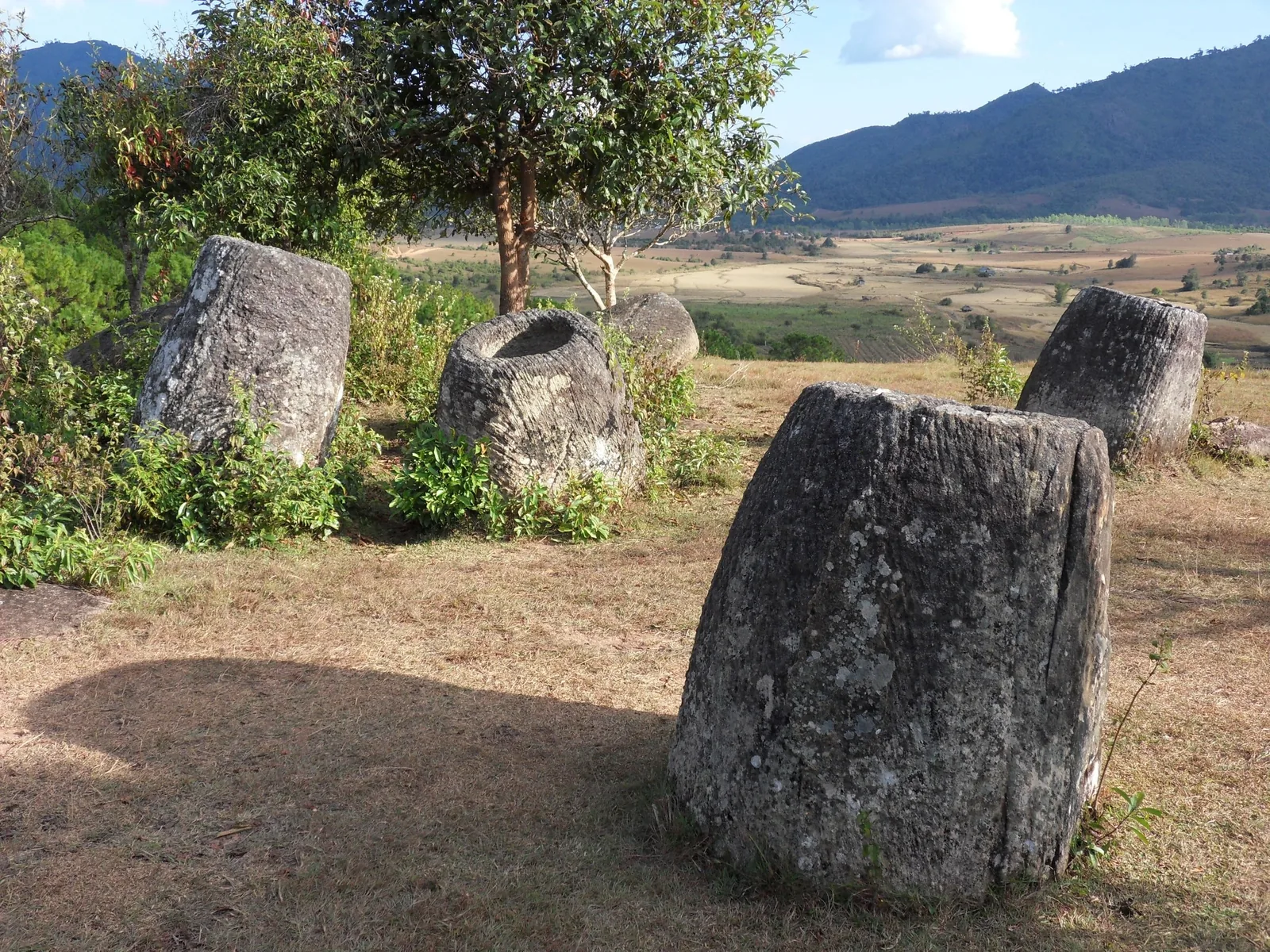
The Plain of Jars is unlike anything else on a Laos itinerary — hundreds of massive stone containers, some over two metres tall, spread across grassy fields with mountains behind them and no inscription to say why they’re there. Archaeologists date them to the Iron Age and lean toward a burial function, but the full picture is still unsettled.
Phonsavan, the provincial town, also sits at the centre of a region flattened by the Secret War of the 1960s and early 1970s. Ruined temples, a bomb-casing-lined visitor centre and a UXO clearance operation still working the fields around town give the area a weight most Laos stops don’t carry, alongside the plateau’s genuine archaeological pull. It sits well as an extension off a [Vientiane](destinations/vientiane) or [Luang Prabang](destinations/luang-prabang) stay rather than a stop on its own.
Things to do
Plain of Jars, Site 1
The largest and most visited of the jar sites sits a short drive from Phonsavan and holds more than 300 jars across open, walkable grassland, with cleared paths marked to keep visitors on safe ground. Come in the morning for softer light and fewer other visitors.
Sites 2 and 3
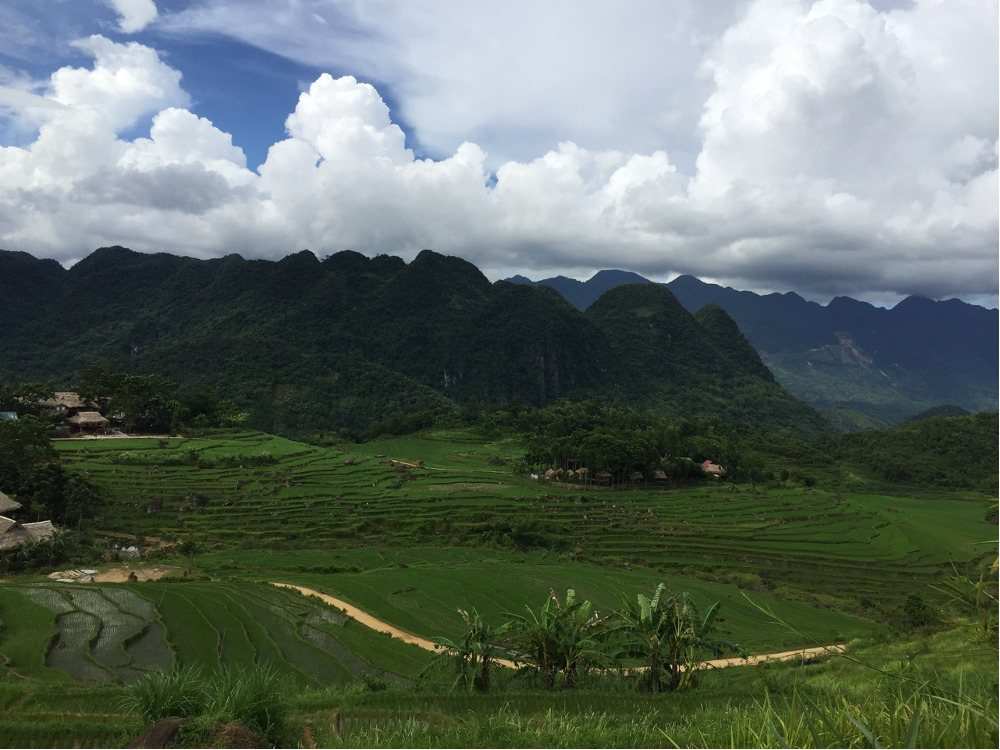
Two further sites spread the jars across forested ridgelines and rice-paddy edges, each with a different setting and a smaller crowd than Site 1. Reaching them adds a half day and usually a local guide, since paths are less developed.
MAG UXO Visitor Information Centre
Run by the Mines Advisory Group, this small centre in Phonsavan explains the scale of unexploded ordnance left across the province and the slow, ongoing work of clearing it. It’s a sober, informative stop that puts the region’s marked walking paths in context.
Old Xieng Khouang town (Muang Khoun)
The former provincial capital was largely destroyed during the war; what remains includes the ruined stupa of That Foun and Wat Phia Wat, where a seated Buddha survived the bombing that took the roof around it.
Hmong and ethnic minority villages
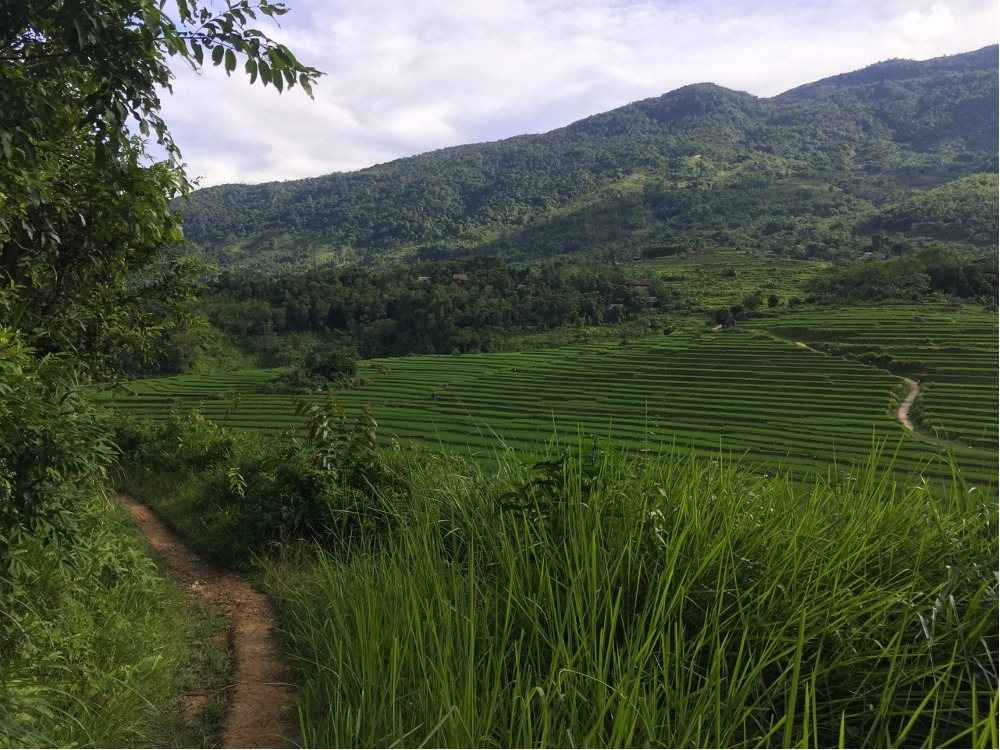
Villages across the plateau are home to Hmong and other highland communities, some open to short visits arranged through a local guide, giving a look at highland farming life distinct from the lowland Mekong towns.
When to go
November to February is dry with the clearest plateau views, though at over 1,000 metres elevation, early mornings and evenings can turn genuinely cold — pack a warm layer, especially for December and January. March and April bring haze from agricultural burning across the region; the wet season from May to October can make some rural jar-site paths muddy or temporarily closed.
Getting there and around
Xieng Khouang Airport, just outside Phonsavan, connects by short flight to Vientiane. Overland, it’s a winding 8 to 10 hour drive from either Vientiane or [Luang Prabang](destinations/luang-prabang) through mountain roads, usually broken into a comfortable day trip with stops. Around Phonsavan, a hired driver or guided day tour is the standard way to reach the jar sites and villages, since public transport is limited.
Tours you can pair with a Xieng Khouang extension
None of our set-departure Laos routes currently run through Xieng Khouang, but the province works well as an add-on before or after a core Laos itinerary — ask us via [contact](contact) to build it in.
Plan your trip
Tell us your dates, your group and what you want out of the trip. We reply with a costed itinerary within one working day.
In pictures
In pictures
In pictures
In pictures
In pictures
In pictures
In pictures
In pictures
In pictures
In pictures
In pictures