Why go
This is the one Lao town built for wandering on foot. Saffron-robed temple roofs sit a few steps from colonial shopfronts turned into cafes, and the whole peninsula between the two rivers is small enough to cross without a tuk-tuk. Nowhere else in the country packs this much to look at into so little ground.
It also rewards an early alarm. The town runs on dawn light and evening light — a monks’ procession before six, a hilltop sunset by six in the evening — with the hottest hours in between best spent by the river or over a slow lunch. Pair a stay here with [Vang Vieng](destinations/vang-vieng) or [Vientiane](destinations/vientiane) and you get the full sweep of northern and central Laos in under two weeks.
Things to do
Dawn alms round through the old quarter
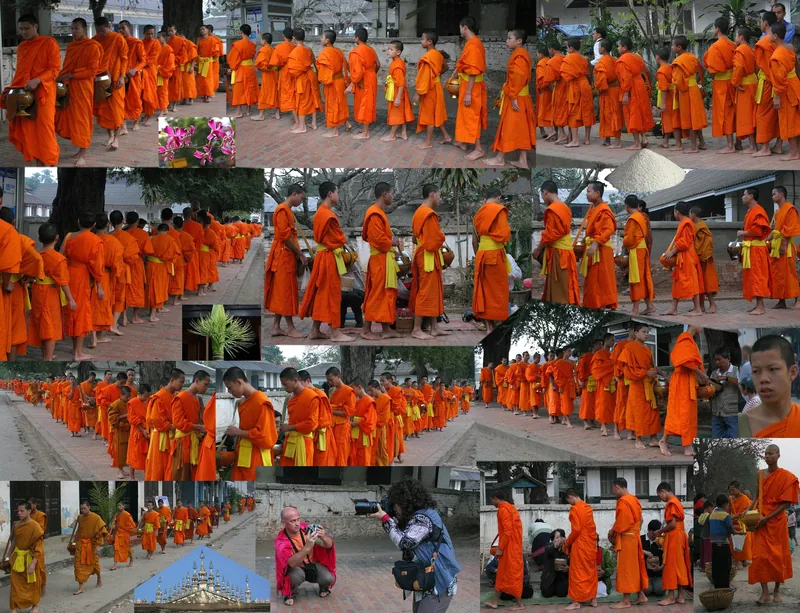
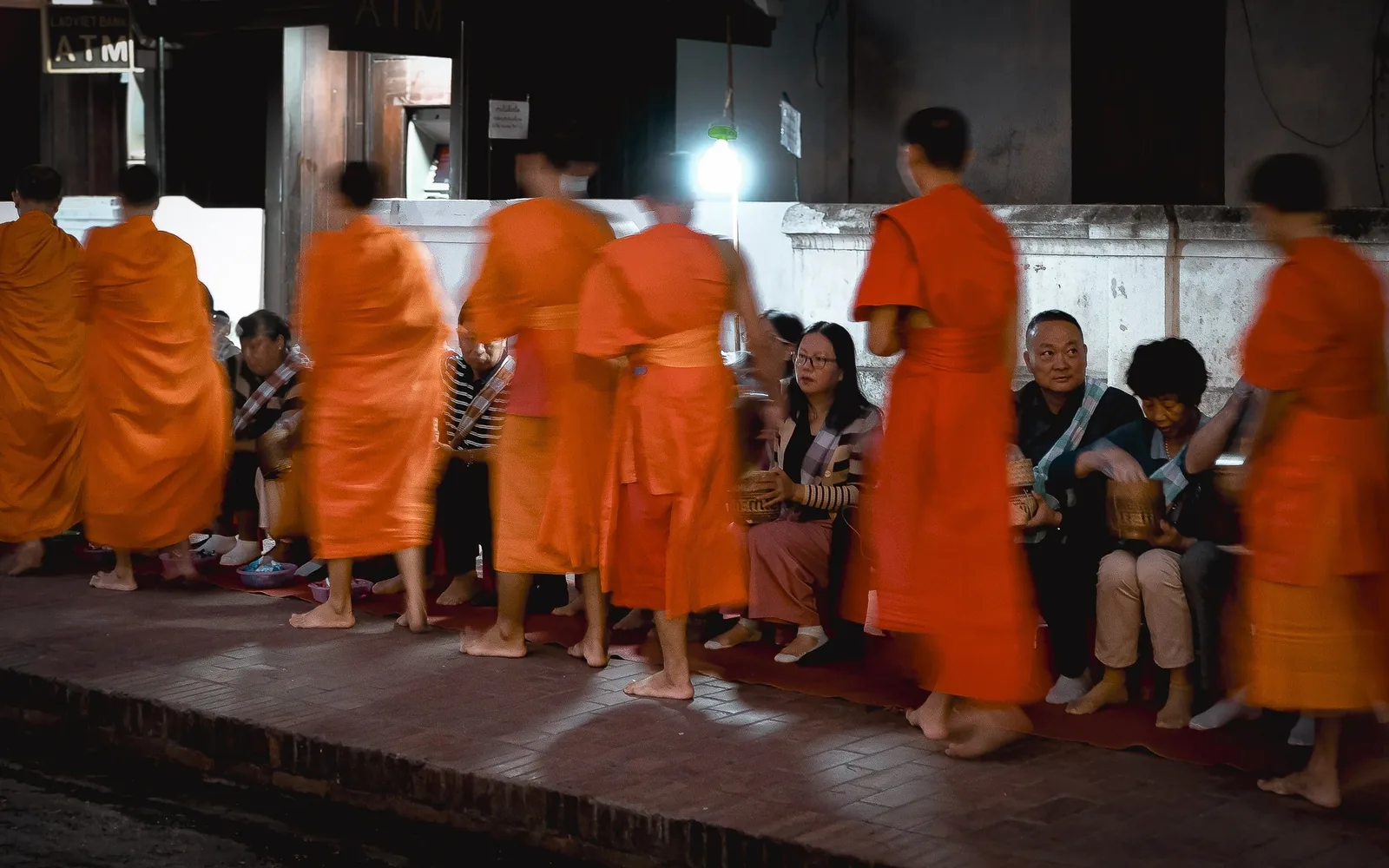
Before six each morning, lines of monks in saffron move barefoot down Sisavangvong Road while residents kneel with baskets of sticky rice. Stand back, stay silent and skip the flash — this is a daily act of merit-making, not a show staged for visitors.
Sunset from Mount Phousi
A short, steep climb of a few hundred steps leads to the gilded stupa of That Chomsi and a clear view over the tiled roofs to the Mekong. Arrive twenty minutes before sunset; the top platform fills up fast in high season.
Wat Xieng Thong and the old royal quarter
The town’s finest temple dates to the 1560s and carries a mosaic tree-of-life mural on its rear wall that took years to restore. Combine it with the nearby Royal Palace Museum, once home to the last king, now holding the royal regalia and a collection of state gifts.
Kuang Si Falls
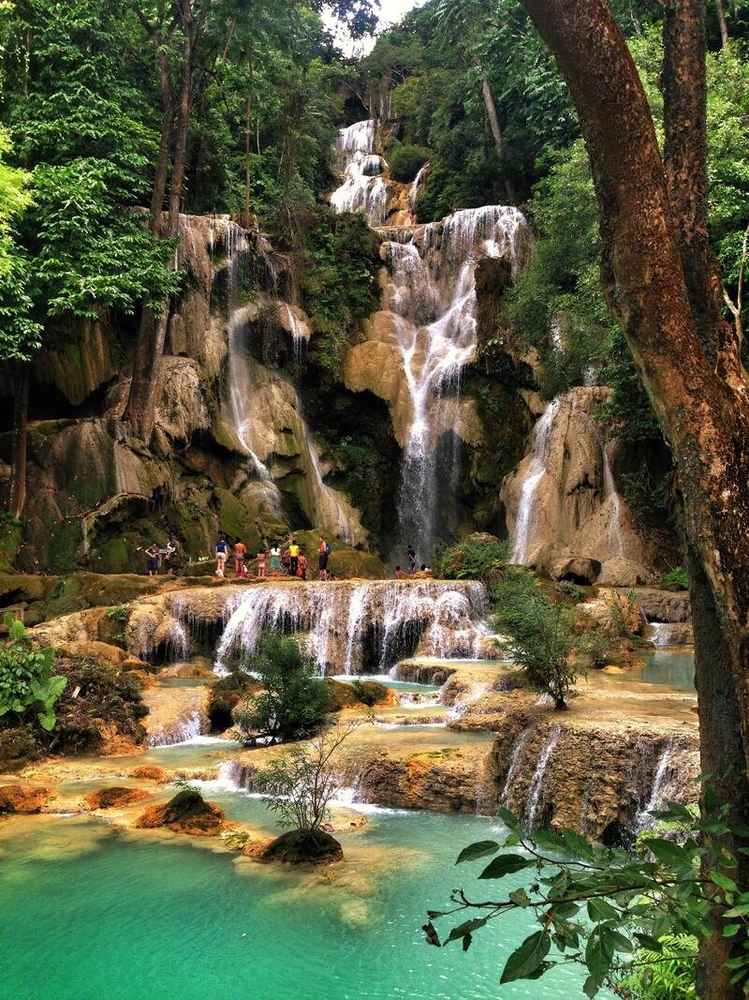
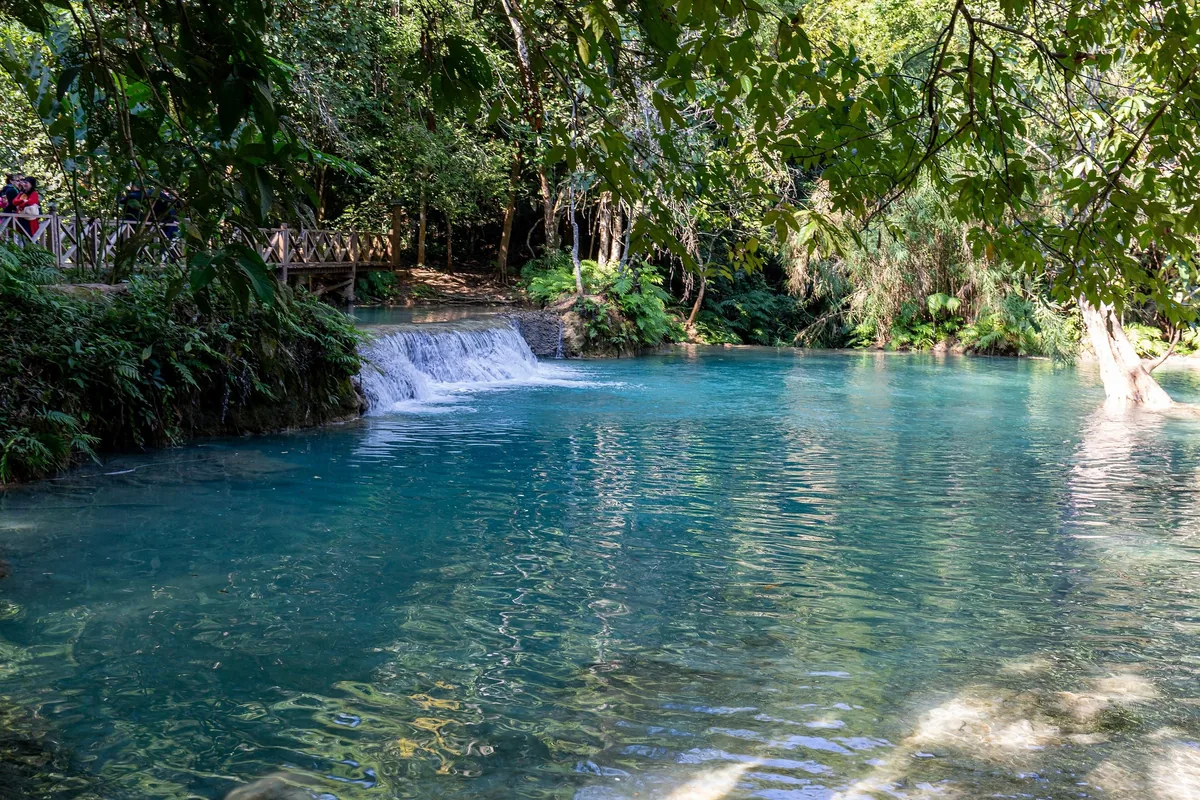
Around 30 kilometres south of town, milky turquoise water drops through a series of limestone pools shaded by forest. The lower pools get crowded by midday; arrive at opening time to swim before the tour buses do, and stop at the rescue centre for sun bears on the path in.
Pak Ou Caves by river
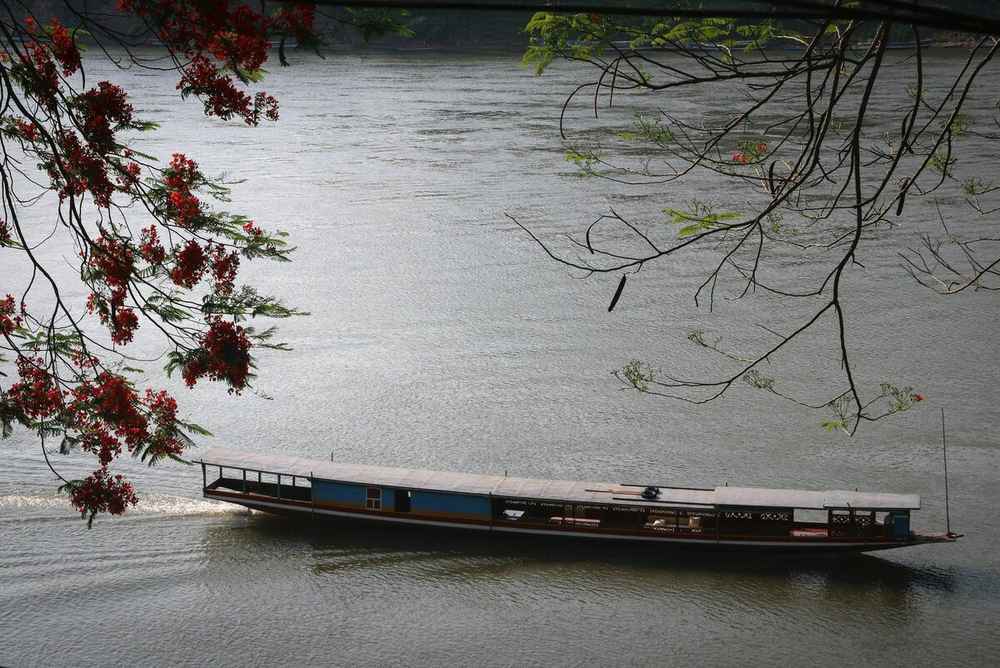
A slow boat upstream on the Mekong reaches two caves stacked with thousands of small Buddha statues left by generations of pilgrims. Most visits pair the caves with a stop at a village that distills rice whisky, a short paddle from the river landing.
When to go
November through February is dry and comparatively cool, with morning temperatures low enough for a jacket at the alms round — the town’s best-looking, most comfortable stretch. March and April turn hot and hazy as farmers burn fields across the region, cutting visibility on the river and hills. The wet season runs roughly May to October, with short, heavy afternoon downpours rather than all-day rain.
Getting there and around
Luang Prabang International Airport takes direct flights from Vientiane, Bangkok, Hanoi and Siem Reap, putting the old quarter fifteen minutes from the runway. The Laos-China Railway also stops here, cutting the ride from Vientiane to under two hours — a useful option if you’re continuing on to [Vang Vieng](destinations/vang-vieng) by train rather than road. Inside town, everything worth seeing sits within walking distance, and a bicycle covers the rest.
Tours that include Luang Prabang
Plan your trip
Tell us your dates, your group and what you want out of the trip. We reply with a costed itinerary within one working day.
In pictures
In pictures
In pictures
In pictures
In pictures
In pictures
In pictures
In pictures
In pictures
In pictures
In pictures