Why go
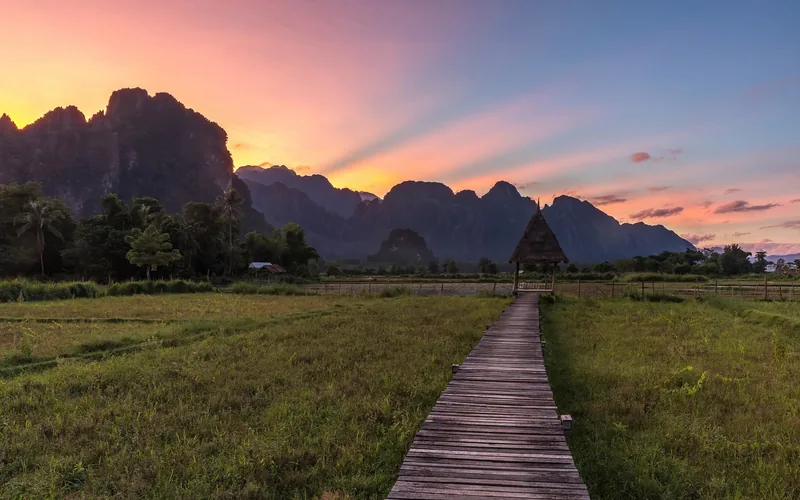
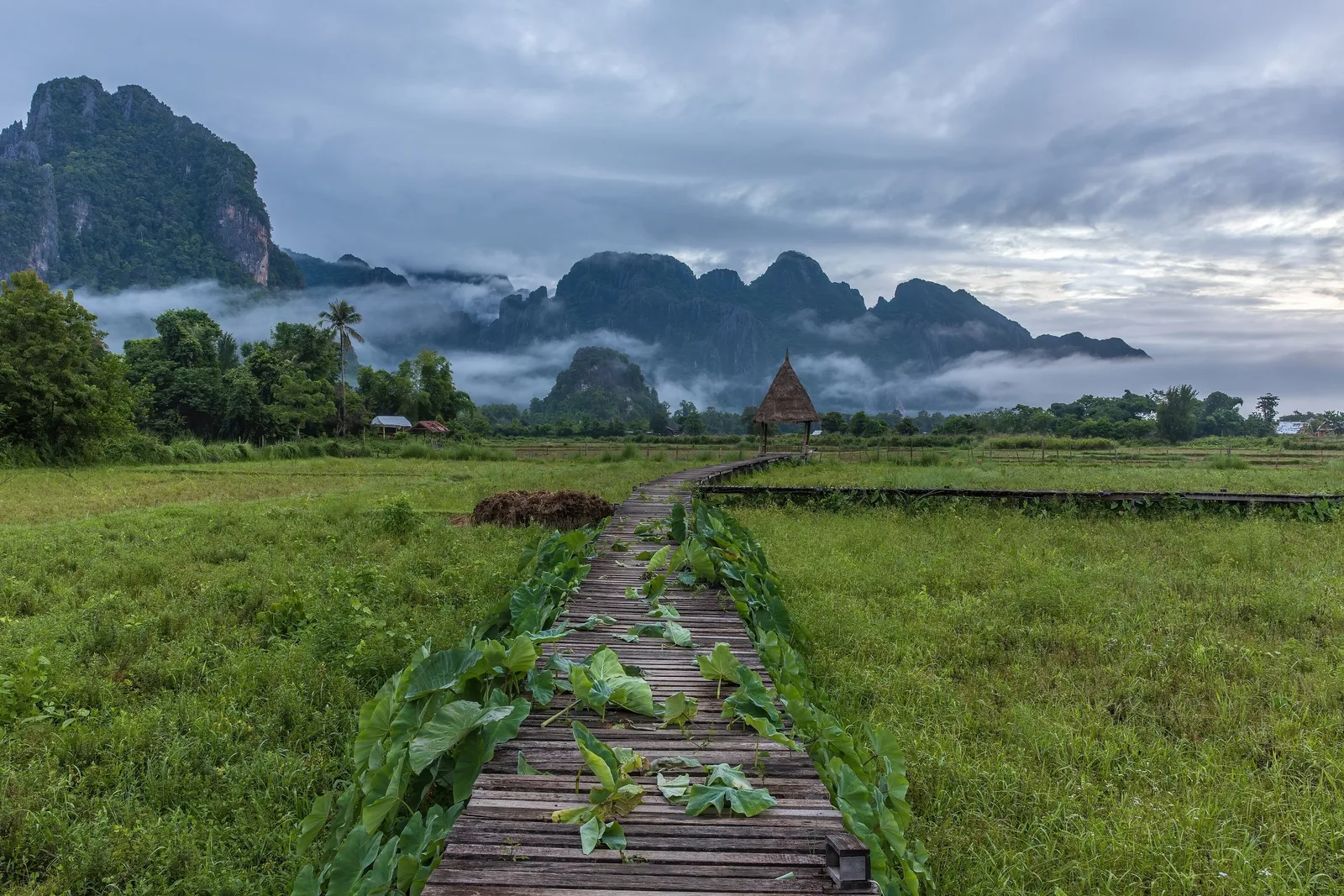
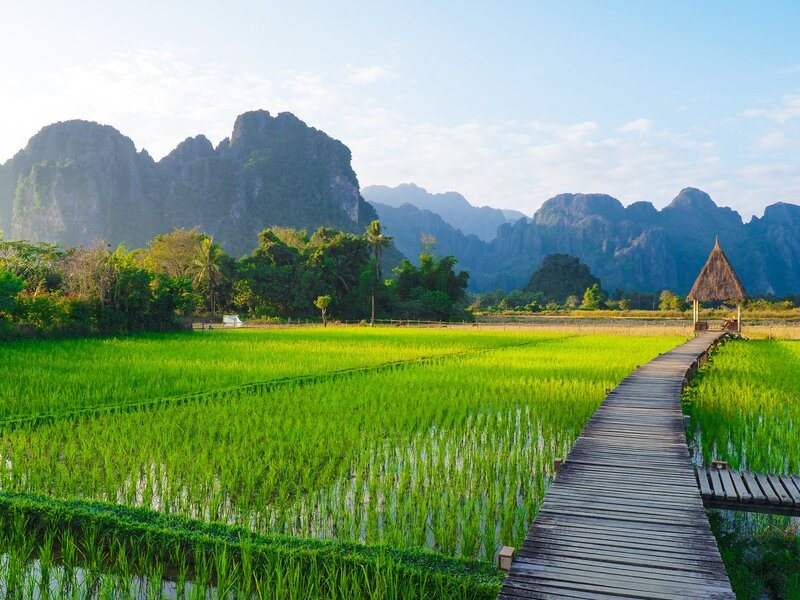
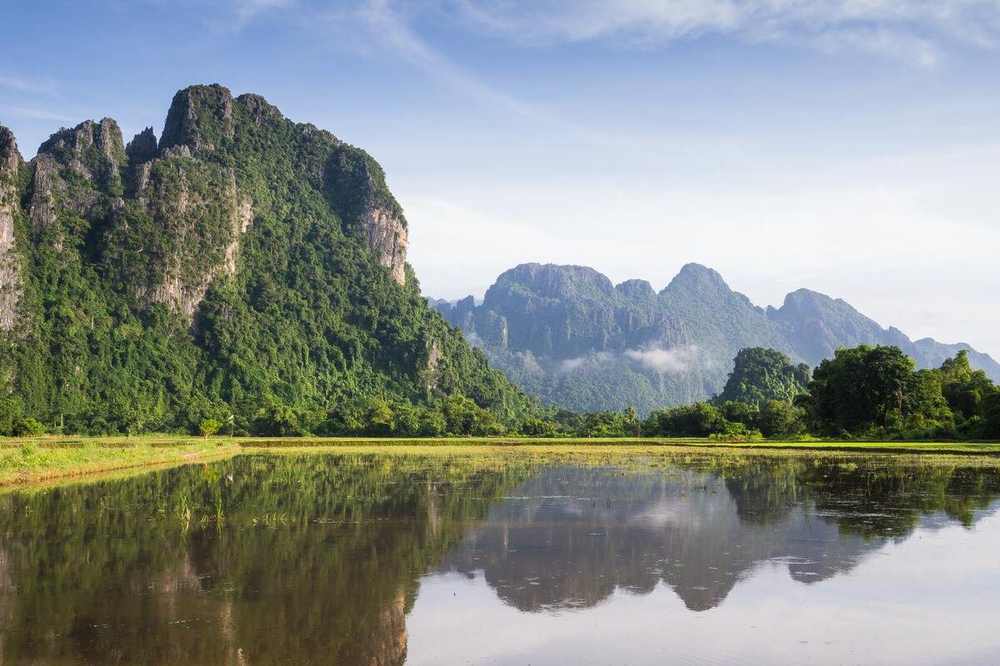
Nowhere else on a standard Laos route puts this much dramatic geology this close to town. Karst towers wrapped in forest crowd both banks of the Nam Song, and a short walk or kayak paddle from the centre reaches caves, lagoons and open rice-field views that most visitors only expect further into the mountains.
The town itself has toned down considerably from its bar-tubing years, and today draws a mix of hikers, climbers and travellers stopping between [Vientiane](destinations/vientiane) and [Luang Prabang](destinations/luang-prabang) on the new rail line. A couple of nights is enough to work through the caves and a river float without feeling rushed.
Things to do
Kayaking and tubing on the Nam Song
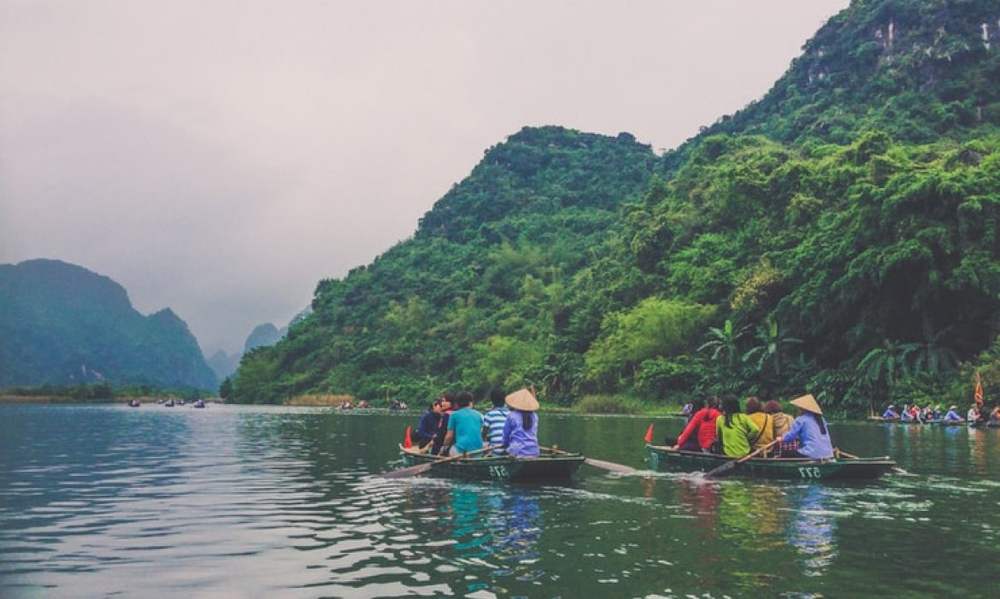
A paddle or float down the river puts the limestone cliffs directly overhead, with sandbanks and riverside bars to stop at along the way. Trips run from a couple of hours to a half day, usually combined with a cave stop.
Tham Chang cave
A steep staircase climbs to a cave once used as a wartime refuge, opening onto a broad chamber and, from the entrance terrace, one of the better views over the valley and river below.
Blue Lagoon and Tham Phu Kham
A short drive or bike ride out of town, a turquoise swimming hole sits below a cave housing a reclining Buddha reached by a short scramble up the hillside. Rope swings over the water make it one of the more popular half-day trips.
Sunrise by hot air balloon
Balloon flights lift off at first light over the karst towers and patchwork rice fields, giving a wide view of the valley that’s hard to get from the ground. Flights depend on weather and usually need booking a day ahead.
Rock climbing on the limestone cliffs
The cliffs around town carry bolted sport routes across a range of grades, with several outfitters running half-day and full-day sessions for both first-timers and experienced climbers.
When to go
November through February gives the clearest air and the sharpest views of the karst towers, along with comfortable daytime temperatures for kayaking and caving. The hot season from March to April can turn hazy with agricultural burning, softening the views; the wet season from May to October raises the river level, which can suit rafting but sometimes closes weaker tubing routes. Check our [Laos travel guide](travel-guide/why-travel-to-laos) for a fuller seasonal breakdown before booking.
Getting there and around
Vang Vieng sits roughly midway between Vientiane and Luang Prabang, and the Laos-China Railway now covers either leg in about an hour, far faster than the old road transfer. Once in town, most sights are within walking or cycling distance, with rented bicycles and scooters the easiest way to reach the further caves and lagoons.
Tours that include Vang Vieng
Plan your trip
Tell us your dates, your group and what you want out of the trip. We reply with a costed itinerary within one working day.
In pictures
In pictures
In pictures
In pictures
In pictures
In pictures
In pictures
In pictures
In pictures
In pictures
In pictures