Laos in brief
Laos has no coastline — the Mekong river does the work a coast might elsewhere, threading past nearly every town worth stopping in, from the temples of [Luang Prabang](destinations/luang-prabang) to the low-rise capital, [Vientiane](destinations/vientiane). Mountains cover most of the country outside the river valleys, which keeps road journeys slow and towns spaced further apart than in Vietnam or Cambodia.
The five destinations below split roughly into three registers: heritage towns built around temples and a slower pace, an outdoor stretch around limestone karst country, and a war-scarred plateau in the northeast that few itineraries reach. Combining more than two or three of them in one trip usually means long travel days in between.
Choose a destination
When to go
Laos splits into three seasons rather than two. November through February is cool and dry, with clear skies and the best conditions for temple visits and river trips — also the busiest stretch for tourism. March and April heat up fast, and haze from seasonal burning can dull the mountain views, particularly in the north. May through October is the wet season, heaviest from June to September, when rural roads can wash out and river levels rise fast enough to change kayaking and boat routes from one day to the next.
How long do you need
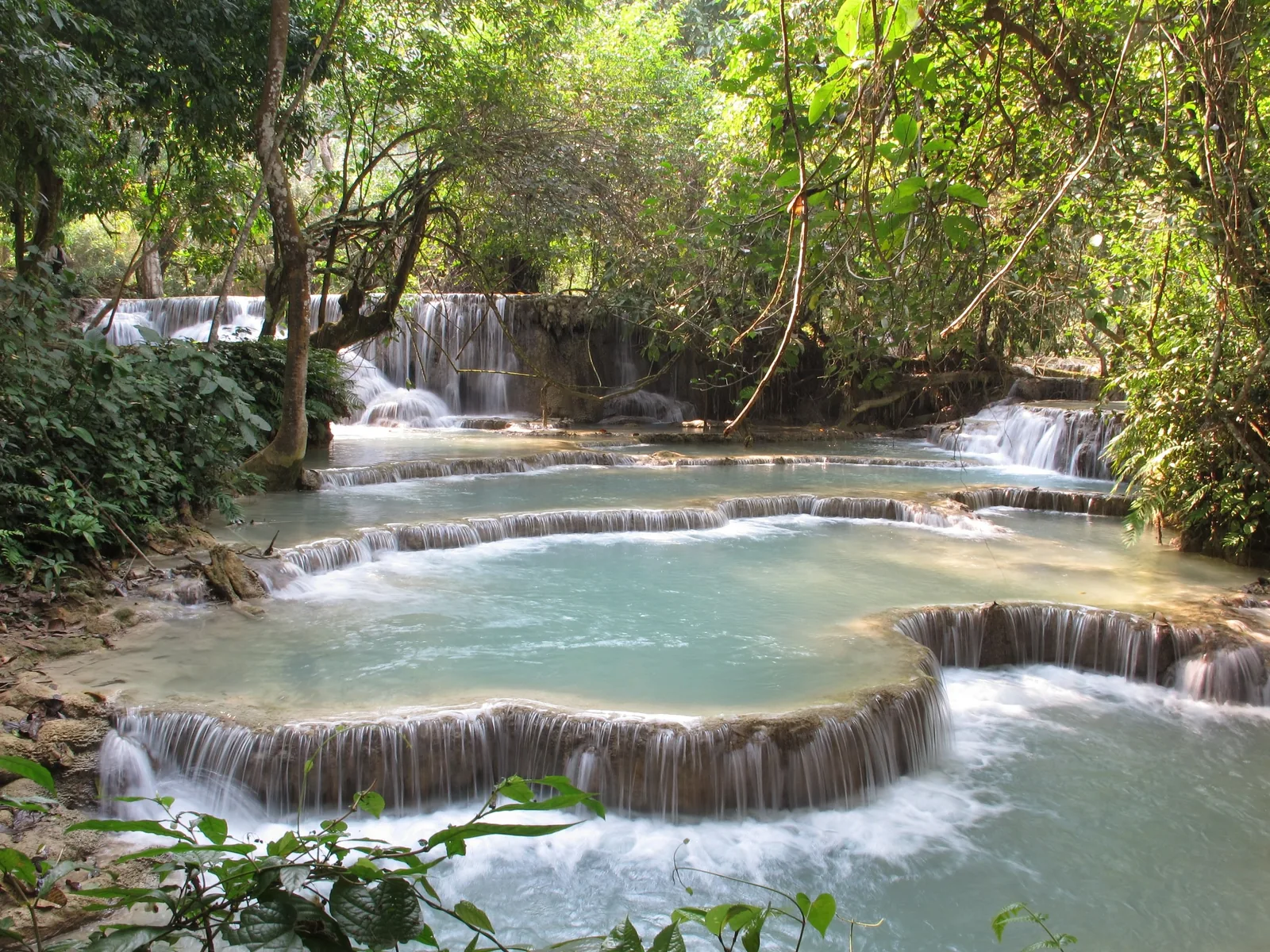
Luang Prabang alone justifies three or four days, between the temples, the night market and a day trip out to Kuang Si. A loop connecting Luang Prabang, Vang Vieng and Vientiane — the country's most-travelled route — takes eight to ten days done overland by minivan and slow boat.
[Beauty of Laos](tours/beauty-of-laos) runs eight days from Luang Prabang down to the Four Thousand Islands in the far south, while [Spirit of Laos](tours/spirit-of-laos) covers similar ground in the other direction, from Vientiane up to Luang Prabang, also over eight days. Reaching Pakse or Xieng Khouang usually means adding a short domestic flight rather than extending the road trip further.
Getting there and around
Most visitors fly into Luang Prabang or Vientiane, both served by direct flights from Bangkok, Hanoi and a handful of other regional hubs; a smaller airport at Pakse covers the south. Once inland, distances that look short on a map often take longer than expected — mountain roads wind rather than run straight, and the twice-daily slow boat between Luang Prabang and the Thai border still takes two full days on the river.
The high-speed rail line between Vientiane and the Chinese border has cut the Vientiane–Luang Prabang leg to under two hours, which has changed how most loops through the country get planned. Buses and minivans still cover routes the railway doesn't reach, including the roads out to Vang Vieng, Pakse and the Bolaven Plateau.
Plan your trip
Tell us your dates, your group and what you want out of the trip. We reply with a costed itinerary within one working day.