Why go
Set this against Bangkok or Hanoi and Vientiane feels almost provincial — low buildings, quiet side streets, a morning market that still trades mostly with locals. That’s the appeal. A day here is enough to see the national symbols and eat well without ever feeling rushed.
It also sits at the hinge of most Laos routes: the Laos-China Railway connects it north to [Vang Vieng](destinations/vang-vieng) and [Luang Prabang](destinations/luang-prabang) in a few hours, while the Friendship Bridge puts Thailand twenty minutes away by taxi. Most travellers use it as a start or end point rather than a long stay, and that’s the right call.
Things to do
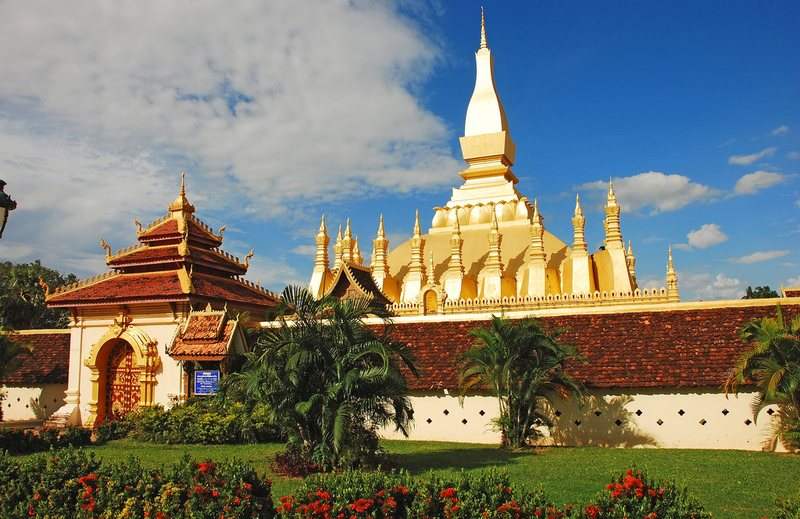
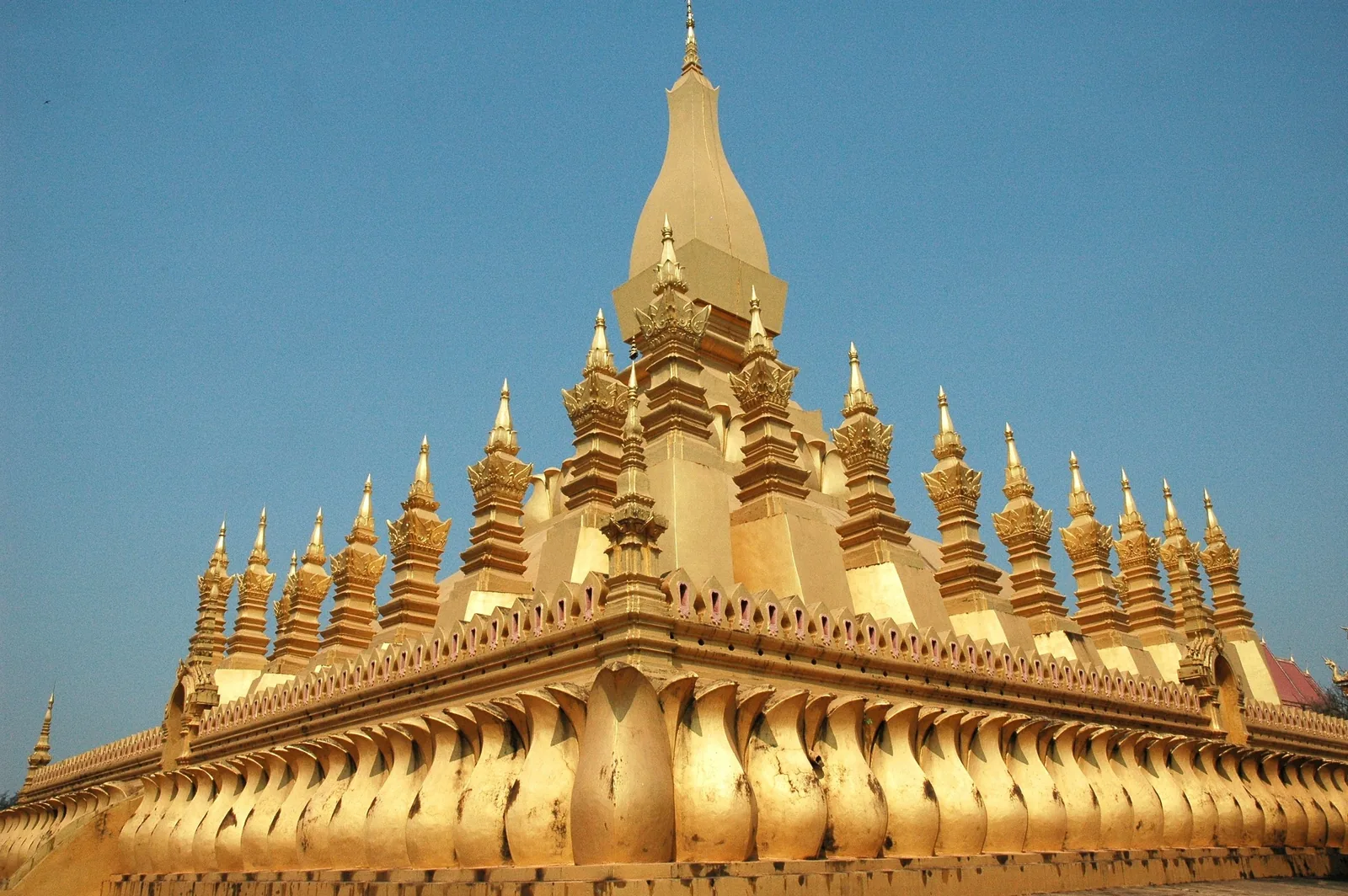
That Luang, the national stupa
Laos’ most sacred monument is a gold-covered stupa first raised in the 16th century and rebuilt several times since, most recently after French colonial-era damage. The surrounding plaza hosts the Boun That Luang festival every November, when the site fills with pilgrims and candlelit processions.
Patuxai
Vientiane’s answer to the Arc de Triomphe was built in the 1960s partly with American-donated cement intended for a new airport runway — a detail locals still bring up with a laugh. Climb the narrow internal stairs for a flat view over the boulevard and the city’s low rooftops.
Wat Si Saket
The oldest temple left standing in central Vientiane survived the 1828 sacking of the city and holds cloistered walls lined with thousands of small Buddha images, some dating back centuries. It’s a quieter, more contemplative stop than the newer temples nearby.
Buddha Park
About 25 kilometres outside town on the Mekong, a field of more than 200 concrete Buddhist and Hindu sculptures was built in 1958 by a self-taught monk. A giant reclining Buddha and a pumpkin-shaped structure you can climb through are the two most photographed pieces.
The Mekong riverside at sunset
The promenade along the river fills with grilled-food carts and folding tables as the heat breaks in the late afternoon. Order grilled fish or sticky rice from a stall and watch the sun go down over Thailand on the opposite bank.
When to go
November to February brings the driest, coolest air of the year and is when the city is most comfortable to walk around. March and April heat up sharply, often past 35 degrees, before the rainy season arrives from May through October with heavy but usually short afternoon storms.
Getting there and around
Wattay International Airport sits close enough to the centre for a short taxi ride, with direct flights from Bangkok, Hanoi, Siem Reap and other regional hubs. Overland travellers from Thailand cross the Mekong at the Friendship Bridge from Nong Khai. Within the city, tuk-tuks and short taxi hops cover the spread-out sights, since distances are longer than the old quarters of [Luang Prabang](destinations/luang-prabang) or [Vang Vieng](destinations/vang-vieng).
Tours that include Vientiane
Plan your trip
Tell us your dates, your group and what you want out of the trip. We reply with a costed itinerary within one working day.
In pictures
In pictures
In pictures
In pictures
In pictures
In pictures
In pictures
In pictures
In pictures
In pictures
In pictures