Trip overview
This route treats Laos as three separate countries rolled into one: the hushed, temple-dense streets of Luang Prabang, the waterfalls and river islands strung along the Mekong near Pakse, and the low-rise, easy-going capital, Vientiane. Two short domestic flights link the three.
Good for travellers who want Laos without rushing it — three nights in Luang Prabang alone gives room for an early monk-blessing walk, a boat day to cave shrines, and a free afternoon for markets or a massage. The southern leg swaps temples for waterfalls and a boat-based look at the country’s far south, where the Mekong widens into a maze of islands.
Pair this with [Spirit of Laos](tours/spirit-of-laos) if you’d rather add Vang Vieng’s limestone karsts before Luang Prabang instead of heading south to Pakse — both start from a similar idea but head in different directions.
Highlights
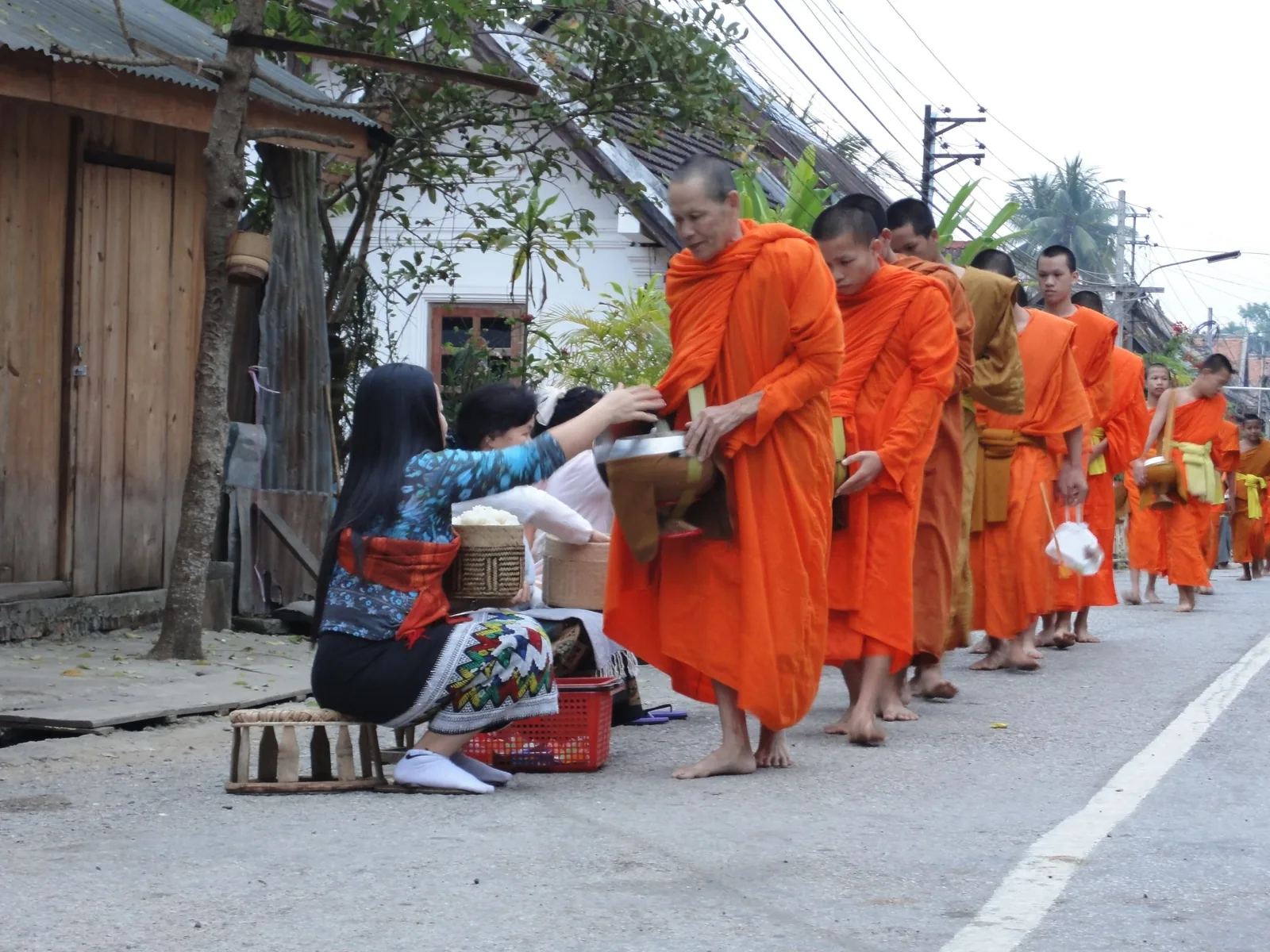
- A pre-dawn walk to witness the Tak Bat alms-giving procession in Luang Prabang
- A full day on the Mekong by boat, ending at the Buddha-filled Pak Ou caves
- An evening Baci blessing ceremony with dinner in Luang Prabang
- Pre-Angkorian ruins at Wat Phu, reached by road from Pakse
- A day among the river islands and waterfalls of southern Laos, including Southeast Asia’s largest waterfall
- A countryside drive past knife-makers, tea plantations and a string of waterfalls near Paksong
- Vientiane’s Buddha Park, with its hundreds of Buddhist and Hindu sculptures on the riverbank
Reserve this trip
Tell us your travel dates and group size and we will hold the arrangements while the itinerary is finalised.
- Days
- 8
Sending this does not charge you. We hold the space and confirm within 24 hours.
Day by day
Day 1 — Arrival in Luang Prabang
Landing in [Luang Prabang](destinations/luang-prabang), a guide meets you for the transfer to your hotel. The town’s UNESCO-listed core — 33 villages of gilded temples and French-era shophouses set where the Nam Khan meets the Mekong — is left for tomorrow; today is simply for settling in.
Meals: none included.
Overnight in Luang Prabang.
Day 2 — Alms round, the old Royal Palace, and Kuang Si Waterfall
Before sunrise, saffron-robed monks file through the streets collecting alms from kneeling residents — a living ritual, not a staged one, so guides ask visitors to keep a respectful distance unless they intend to take part. Breakfast follows, then a walk through Phosi Market, where dried buffalo skin and hill-tribe textiles sit next to the everyday vegetables.
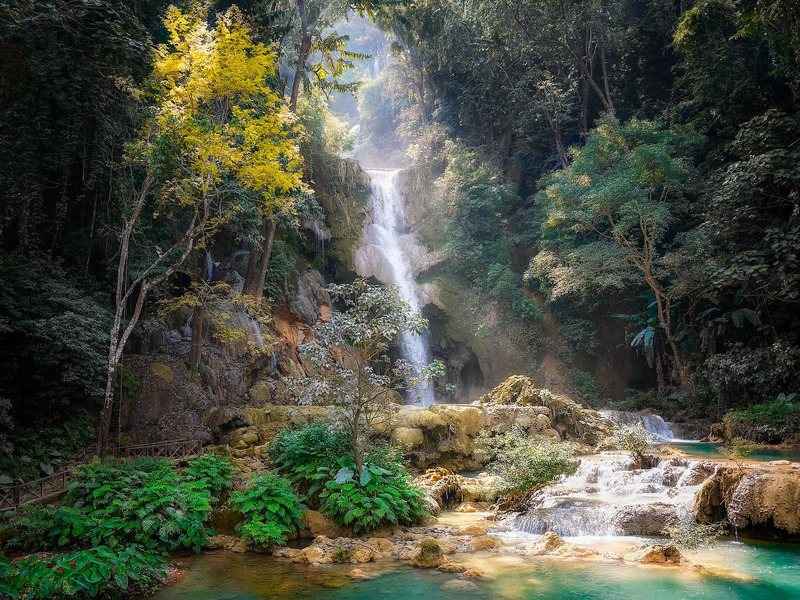
Once the seat of the kings of Luang Prabang, the Royal Palace is a museum today, holding regalia and the city’s namesake gold Buddha image; nearby, Wat Mai’s tiered roof and gilded reliefs mark the edge of the old town. The afternoon heads out to Kuang Si Waterfall, stopping at ethnic-minority villages along the way, to walk the forest trails around its turquoise pools before a sunset climb up Phousi Hill back in town.
Meals: breakfast.
Overnight in Luang Prabang.
Day 3 — Mekong boat day to the Pak Ou caves
A full day on the water runs upstream past the riverside villages of Ban Xiengmene and Ban Chan, calling at the old royal temple of Wat Longkhoun and the nearby Sackarine caves before reaching Pak Ou, where two cliffside caves hold thousands of Buddha statues left by generations of pilgrims. Lunch is taken riverside at Ban Ou, and the return trip stops at a village distilling rice whisky and another known for handmade mulberry-bark paper.
The day ends with a Baci ceremony — cotton threads tied around the wrist while an elder chants blessings for good fortune — followed by dinner.
Meals: breakfast, dinner.
Overnight in Luang Prabang.
Day 4 — Fly south to the Wat Phu ruins and Khong Island
A short flight reaches Pakse, from where the road continues to Champasak district and the pre-Angkorian ruins of Wat Phu, set against the base of a sacred mountain and among the oldest Khmer sites in the region. A stop at Khiet Ngong village breaks the onward drive to Khong Island in the far south.
Meals: breakfast.
Overnight on Khong Island.
Day 5 — The Four Thousand Islands by boat and tuk-tuk
A long-tail boat crosses to Khone Island, where a handful of French colonial buildings and a rusting stretch of Laos’ only railway line survive from the early twentieth century. A tuk-tuk carries you on to Liphi waterfall, also called Somphamit, which marks the natural border with Cambodia, before a return by boat and a stop at Khone Phapeng, whose sheer volume of water makes it Southeast Asia’s biggest falls. You’re back in Pakse by late afternoon; a look at Oup Moung temple can be added if the day still has room for it.
Meals: breakfast.
Overnight in Pakse.
Day 6 — The Bolaven Plateau: knives, tea and waterfalls
A day loop out of Pakse takes in a village known for traditional knife-forging, then tea plantations on the Bolaven Plateau before Tad Fan, a twin waterfall dropping through jungle near a cluster of coffee farms. Tad Yeung offers a chance to cool off, the Paksong market a look at plateau produce, and the route continues through the Mon-Khmer village of Kocphoung before a final stop at Tad Pha Suam waterfall.
Meals: breakfast.
Overnight in Pakse.
Day 7 — Fly to Vientiane and a city tour
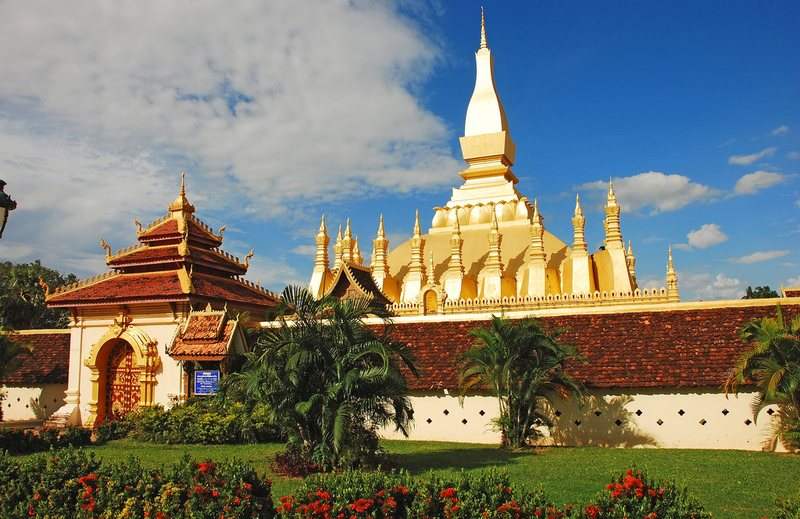
A flight north reaches [Vientiane](destinations/vientiane), a capital that feels more like a large town, shaped by a mix of Lao, French, Chinese and Vietnamese influences. The city tour covers Wat Sisaket, its walls lined with thousands of small Buddha niches, Wat Prakeo which once served as the royal temple, the sacred That Luang stupa, and the Patuxay war monument modelled loosely on the Arc de Triomphe.
Meals: breakfast.
Overnight in Vientiane.
Day 8 — Buddha Park and departure
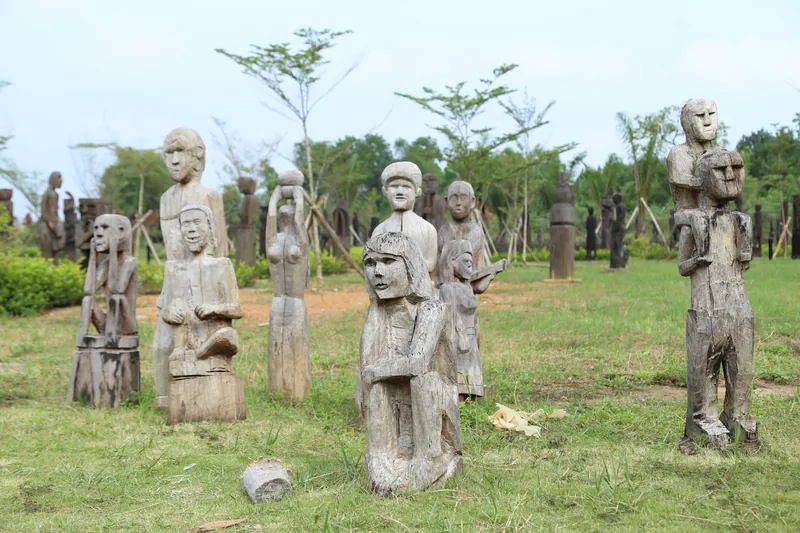
A short drive out of the city reaches Buddha Park, a riverside meadow scattered with more than two hundred concrete Buddhist and Hindu sculptures built by a single eccentric artist-monk. Back in Vientiane, the day is free until your transfer to the airport for departure.
Meals: breakfast.
What's included
- Private air-conditioned transport throughout
- A licensed, English-speaking guide for the whole route
- A round-the-clock support line
- Nightly hotel stays including breakfast
- Meals as listed day by day
- Sights and entrance tickets set out in the itinerary
- The private boat trips described above
- Flight reconfirmations
- Bottled water during transfers
Not included:
- International arrival and departure flights
- Domestic flights within Laos
- Early check-in or late check-out
- Travel insurance and other personal spending
- Meals not listed in the itinerary, and drinks with meals
- Visa fees, where applicable
- Tips and gratuities
- Anything not otherwise specified above
Good to know
The Tak Bat alms round on Day 2 is a genuine daily practice, not a tourist show — shoulders, chest and legs should stay covered, and photographers are asked to keep a respectful distance. Most nationalities can get a Laos visa on arrival at Luang Prabang or Vientiane airport; check current requirements before you fly.
Southern Laos runs warmer and more humid than Luang Prabang, especially around the waterfalls near Pakse, so light, quick-dry clothing works better than anything heavy. Roads on the Bolaven Plateau leg wind through hill country, which can make for a longer, bumpier day than the mileage suggests.
Two internal flights connect the three regions on this route, so build in some buffer if you’re connecting onward the same day. For more on timing a Laos trip, see [why travel to Laos](travel-guide/why-travel-to-laos).
Plan your trip
Tell us your dates, your group and what you want out of the trip. We reply with a costed itinerary within one working day.
In pictures
In pictures
In pictures
In pictures
In pictures
In pictures
In pictures
In pictures
In pictures
In pictures
In pictures