What a Ha Long Bay cruise actually involves
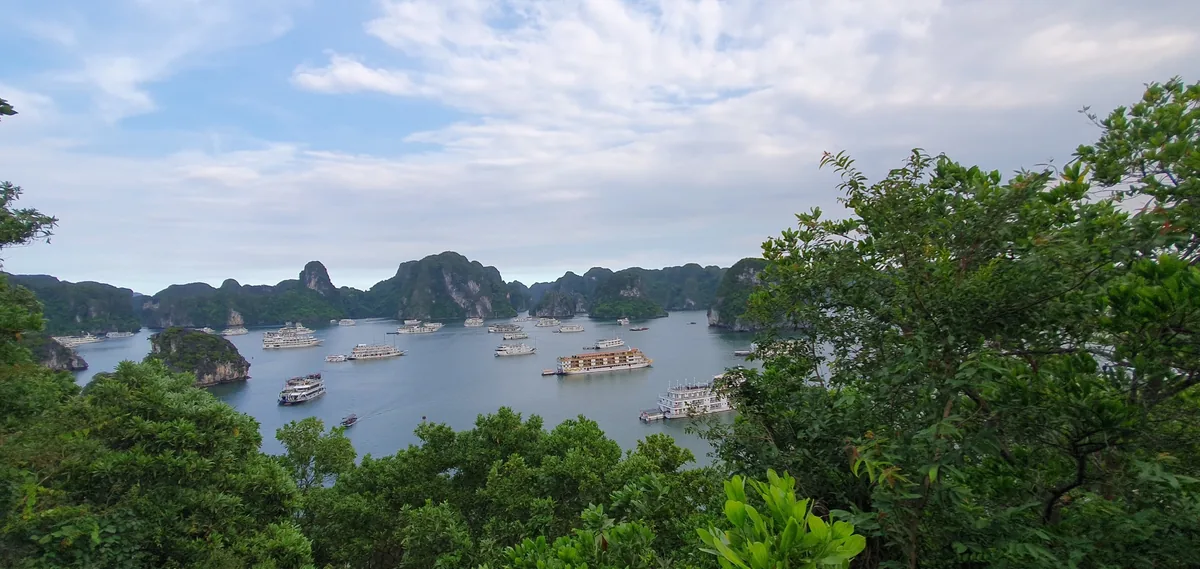
Almost nobody sees Ha Long Bay from land. The nearly two thousand limestone islands scattered across [the bay](destinations/ha-long-bay) are experienced from a boat, with a sleeping cabin as the main way to take in more than an afternoon of it. A typical itinerary boards early in the afternoon, cruises out past the harbour traffic, and anchors somewhere quiet for the night.
Local legend explains the name — 'descending dragon' — as dragons sent to spit jewels into the sea, the jewels hardening into the islands and walls that once shielded the coast from invaders. Whatever the origin, the geology itself took roughly twenty thousand years to form, layered through several archaeological cultures dating back some eighteen millennia.
Choosing between a day trip, one night and two nights
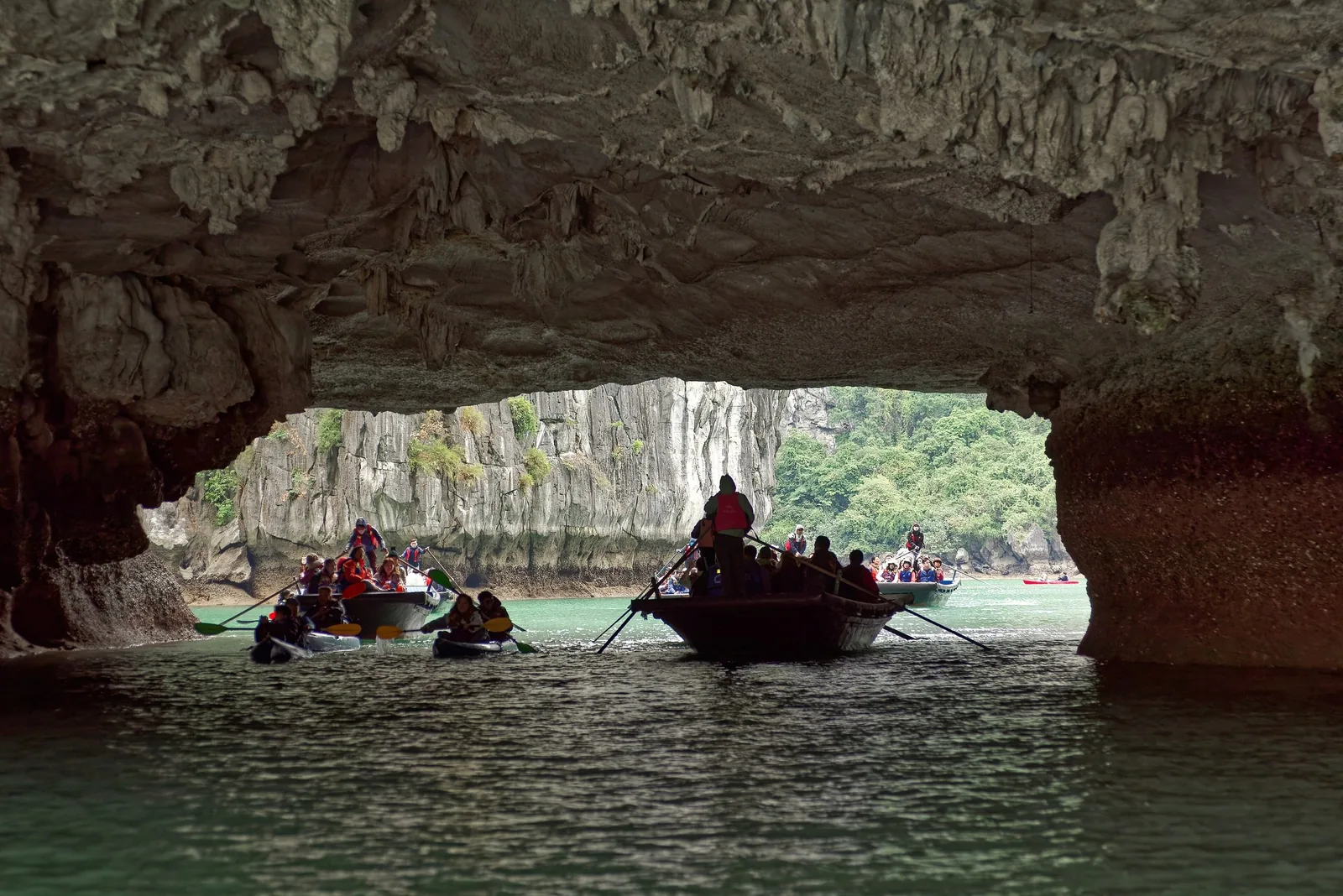
A day trip from Hanoi covers roughly seven hours of driving for a few hours on the water — doable, but tight, and it misses the sunrise and sunset light that make the bay worth photographing. One night aboard is what most travellers choose: a late-afternoon cruise out, dinner on deck, a cave visit or kayak session the next morning, back on shore by early afternoon.
A second night, usually spent further out around Lan Ha Bay or Cat Ba island, thins the crowds noticeably and adds time for kayaking or a short walk on Cat Ba's limestone trails. It suits anyone who finds the main bay's day-tripper traffic distracting.
Best season for a cruise
October through December brings the clearest skies and sharpest visibility, with daytime temperatures sitting comfortably in the low twenties. It's also the season locals build festivals around — Ha Long Carnival in summer draws crowds for a coastal parade, while Yen Tu and Cua Ong festivals fall at other points in the year, though neither changes cruise scheduling directly. For a wider look at timing a trip around Vietnam's regions, see our [travel tips guide](travel-guide/indochina-travel-tips).
December through February turns cool and often misty, which suits cave visits better than the open-deck views the bay is known for. Typhoon season runs roughly July to September, when operators sometimes reroute or shorten sailings on short notice — worth building a spare day into the schedule if your dates are fixed.
What to pack and what to skip
- A light jacket for evenings even in the warmer months — the water cools the air noticeably after sunset.
- Reef-safe sunscreen and a hat; most of a cruise day happens on an open deck.
- Swimwear for a stop at Ti Top island or a swimming break off the boat's stern.
- Small cash notes for drinks or souvenirs sold by local rowing-boat vendors near the floating villages.
- Nothing heavier than a day bag — cabins are compact, and larger luggage stays packed for the whole cruise.
Food on board and on shore
Meals are usually included in a cruise booking and served family-style on deck or in a dining cabin, built around whatever the crew picked up that morning — squid, crab, shrimp and reef fish feature heavily, often grilled or steamed with little more than lemongrass and chilli. It's worth flagging dietary needs at booking rather than once aboard, since menus are typically fixed a day at a time.
On shore, Ha Long City's market stalls serve a rougher version of the same seafood, along with squid sausage and other snacks that rarely make it onto a cruise menu — see our [Vietnamese food guide](travel-guide/vietnamese-food-guide) for more on what to look for. Worth a stop if there's a spare hour either side of boarding.

Plan it with us
Several of our Vietnam routes fold a Ha Long Bay night into a longer itinerary, so the cruise timing lines up with the rest of the trip instead of standing alone.
Plan your trip
Tell us your dates, your group and what you want out of the trip. We reply with a costed itinerary within one working day.