Why this coffee tastes different
Coffee is not native to Vietnam. French planters brought it in during the colonial era, alongside rubber, and found the red volcanic soil of the Central Highlands suited it well. Farms spread from Lam Dong up through Buon Ma Thuot, which sits above 1,500 metres and still grows the bulk of the country's beans today.
Robusta dominates, which is part of why the local brew tastes heavier and more bitter than a filter coffee from Italy or Colombia — it's built to survive a flood of condensed milk or a slow drip through a metal press, not to be sipped black. Growers also plant smaller amounts of Arabica, Culi and Moka, the last of which is strongly associated with the Buon Ma Thuot highlands.
Hanoi's answer: egg coffee
Cooler air in the north made hot coffee the norm, and Hanoi's contribution to the drink is egg coffee — a whipped mix of egg yolk, condensed milk and a little sugar, spooned or poured over a shot of hot black coffee. Done well it comes out closer to a warm custard sitting on coffee than anything resembling a latte, thick enough to eat with a spoon before it cools.
It's a local specialty rather than an everyday drink for most Hanoians, so the best versions tend to come from cafes that have been making it for decades rather than one that added it to a menu for visitors.
Saigon's answer: iced and sweet
Head south and the climate flips the drink entirely. Ho Chi Minh City sits in a year-round tropical belt, so the standard order is ca phe sua da — dark-roast coffee dripped slowly through a small metal filter directly onto a layer of condensed milk, then poured over ice. It's the drink most visitors picture when they think of [Vietnamese coffee](destinations/ho-chi-minh-city), and it's sold from folding stools on the pavement as often as from a proper cafe.
A newer variant worth trying is coconut coffee, where coconut milk is blended or squeezed fresh and combined with hot coffee and condensed milk before being poured over ice or blended into something closer to a milkshake. It's rich, and a large one on a hot afternoon is usually plenty.
Other brewing styles worth seeking out
Beyond the two signature drinks, a handful of other methods turn up depending on region and who's behind the counter.
- Drip filter (phin): the classic small metal press set over a cup or glass, letting hot water pull through ground coffee one slow drop at a time — the base method for most of the drinks above, and easy to buy and use at home.
- Cloth-filter coffee: a Saigon tradition, most associated with the city's Chinese community, where ground coffee sits in a fabric sock-style filter and is simmered for around half an hour in a clay pot rather than dripped — a slower, muddier brew that's increasingly hard to find outside a handful of old-school shops.
- Salt coffee: a Hue speciality that layers a thin salted cream on top of iced black coffee, giving a savoury edge that surprises most first-time visitors.
Ordering it without the sugar overload
Locally, coffee is served very sweet by default, and condensed milk is generous rather than measured. If that's not your taste, ask for it 'it duong' (less sugar) or request the condensed milk on the side so you can control how much goes in. Black coffee, hot or iced, is simply ca phe den if you'd rather skip the dairy altogether.
Where to drink it
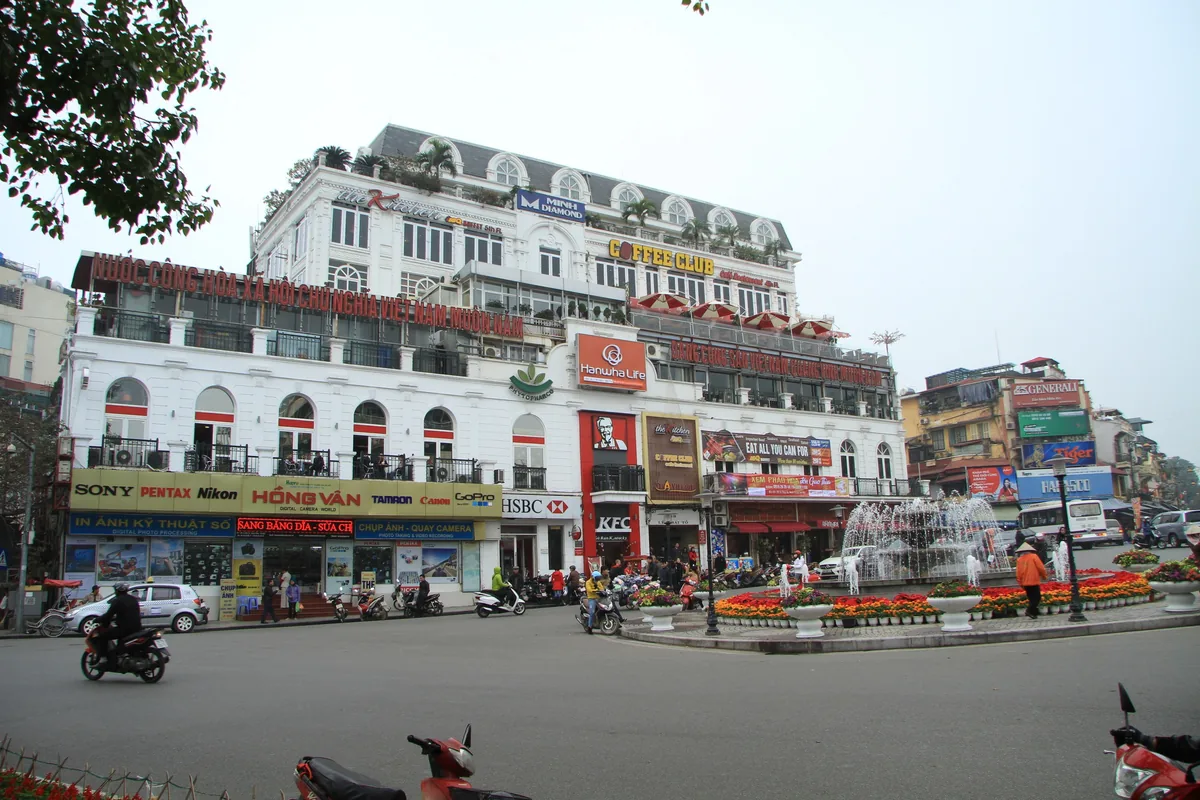
National chains such as Highland Coffee, Trung Nguyen and Phuc Long are reliable and air-conditioned, useful when you want a consistent cup between sightseeing stops. For the real experience, though, a plastic stool at a street-corner stall — often with no sign, just a crowd of regulars and a portable gas burner — will usually pour something more memorable than any chain outlet. Pair a cup with a fresh banh mi from the same stretch of pavement and you've covered two of the country's best-known street foods in one stop; our [food guide](travel-guide/vietnamese-food-guide) goes deeper on what else to order alongside it.
If you're building a trip around food as much as sightseeing, our [culinary-focused route](tours/vietnam-culinary-journey) sets aside time for exactly this kind of café-hopping, alongside cooking classes and market visits from north to south. For general planning pointers before you land, see our [travel tips guide](travel-guide/indochina-travel-tips).
Plan it with us
If coffee culture is one of the things pulling you toward Vietnam, it fits naturally into a wider trip rather than a stop on its own. These routes build in time for the cafes, markets and street-food stalls where the best cups are actually poured.
Plan your trip
Tell us your dates, your group and what you want out of the trip. We reply with a costed itinerary within one working day.