Hanoi: broth bowls and old-quarter carts
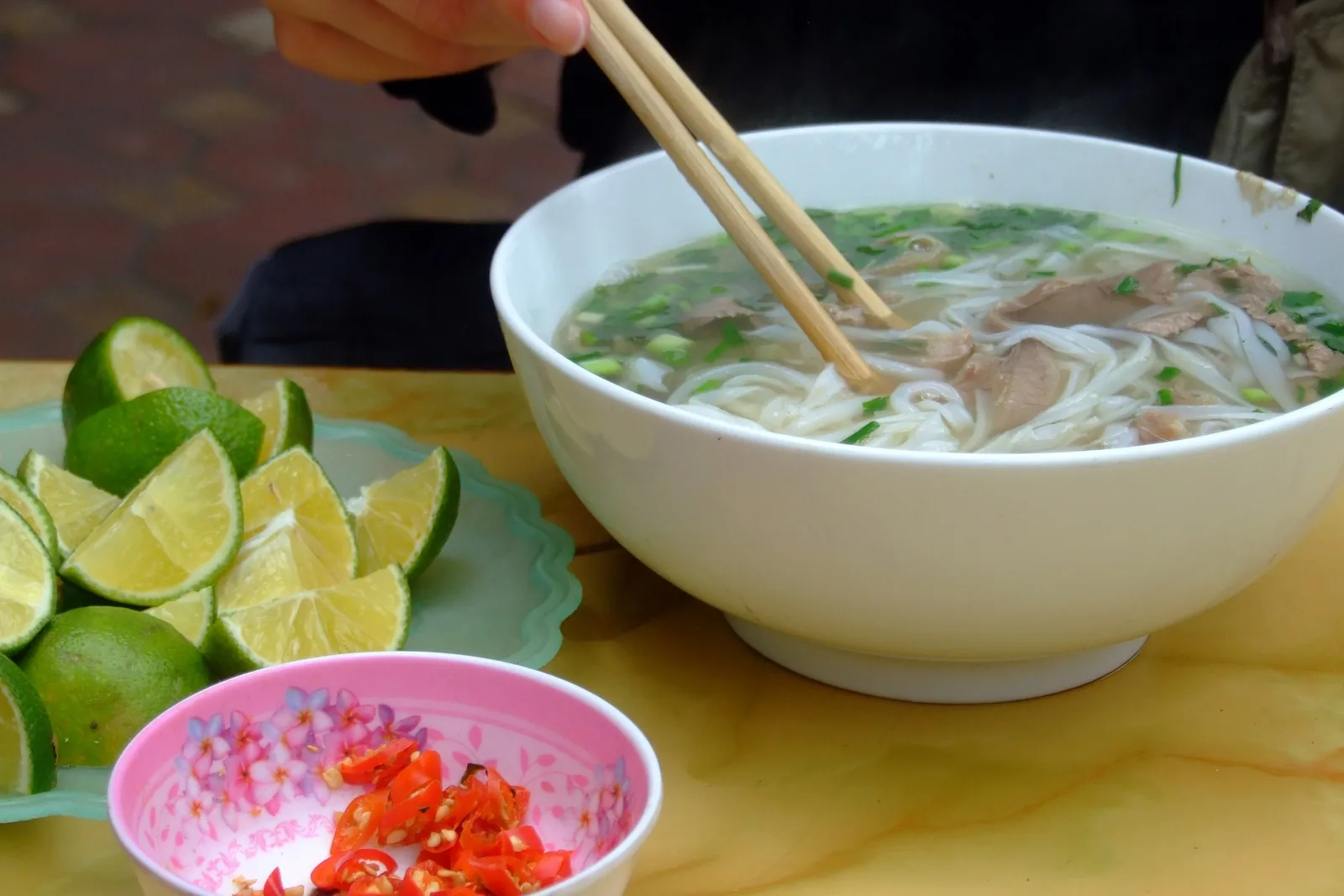
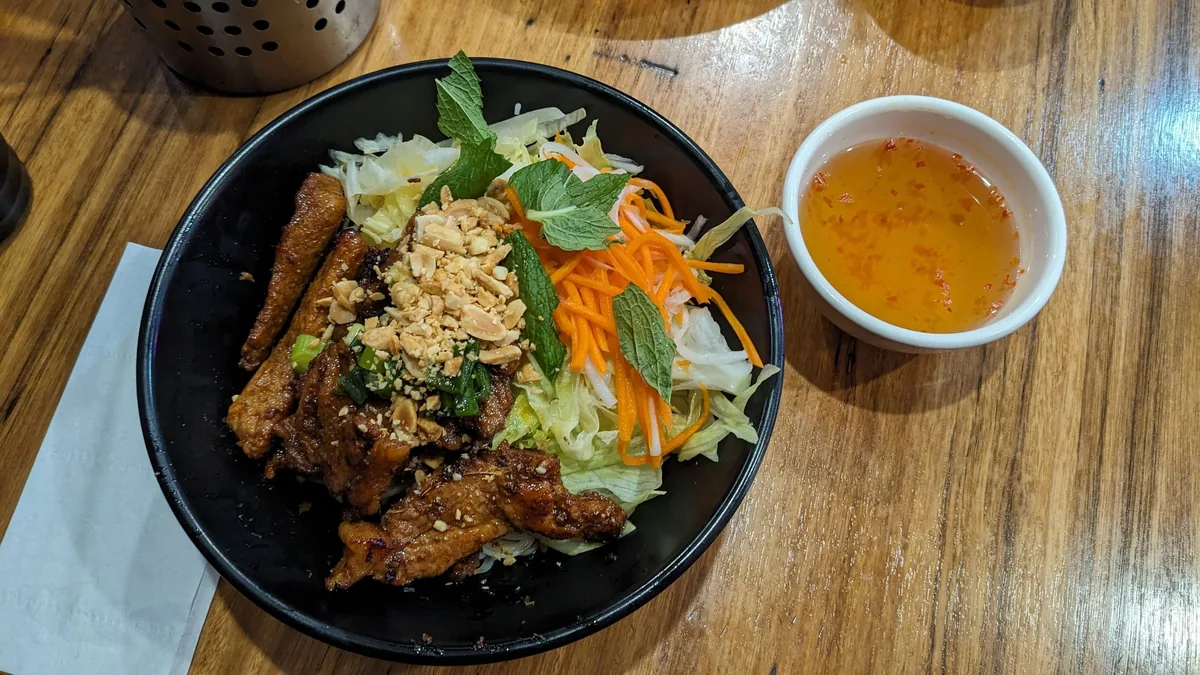
Hanoi's kitchen leans savoury and restrained next to the south, and its two signature bowls make the point. Pho starts before dawn, when stallholders in the Old Quarter simmer beef bones for hours so the broth turns clear rather than cloudy, then bulk it out with flat rice noodles, herbs and a squeeze of lime. Bun cha runs on the opposite rhythm: grilled pork patties and belly slices dunked into a sweet-sour fish sauce bath, eaten at lunch rather than breakfast, usually from a low plastic stool with the grill smoking a few feet away.
Once the weather turns, cold-season snacks appear on nearly every corner — Trang Tien ice cream and sticky rice ice cream both turn up from carts that have barely changed in decades. Our [guide to Hanoi in autumn](travel-guide/hanoi-in-autumn) covers the season when this street food scene is at its best.
Ha Long: what the boats bring in that morning
Ha Long's kitchen runs on the sea in front of it. Squid sausage, known locally as cha muc, mixes minced squid with pork, mushroom and shrimp paste before it's rolled and deep-fried — a market-stall staple rather than a restaurant order. Horseshoe crab, called sam, gets steamed, grilled or stir-fried depending on the stall, and gat gu cake, a soft steamed rice cake with an odd name and a distinctly local flavour, is worth tracking down even though it rarely appears on English menus.
A [Ha Long Bay cruise](destinations/ha-long-bay) usually folds a seafood dinner into the overnight itinerary, so there's no need to hunt these dishes down on shore — though the market stalls in Ha Long City sell a rougher, cheaper version worth trying if there's a spare morning before boarding.
Hue: the old court's spice cabinet
Hue cooked for emperors, and the food still carries that layered, slightly theatrical character — heavy on lemongrass, chilli oil and a fermented condiment stirred through for depth. The city's headline dish, bun bo hue, is a beef and pork broth sharpened with annatto and chilli, noticeably hotter than anything from the north. Small savoury cakes such as banh khot, banh beo and banh loc arrive as a shared plate rather than a single order, each barely a mouthful and usually eaten in a run of four or five kinds at once.
Nem lui, lemongrass-skewered grilled pork wrapped into a rice-paper roll with herbs and dipped into a thick peanut sauce, is closer to a hands-on snack than a sit-down meal, and it's a good one for watching how a table works through several small dishes rather than one big plate. Hue is one of the stops on our [Vietnam Culinary Journey](tours/vietnam-culinary-journey), which builds cooking sessions around exactly this kind of dish.
Hoi An: a dumpling only one family still makes
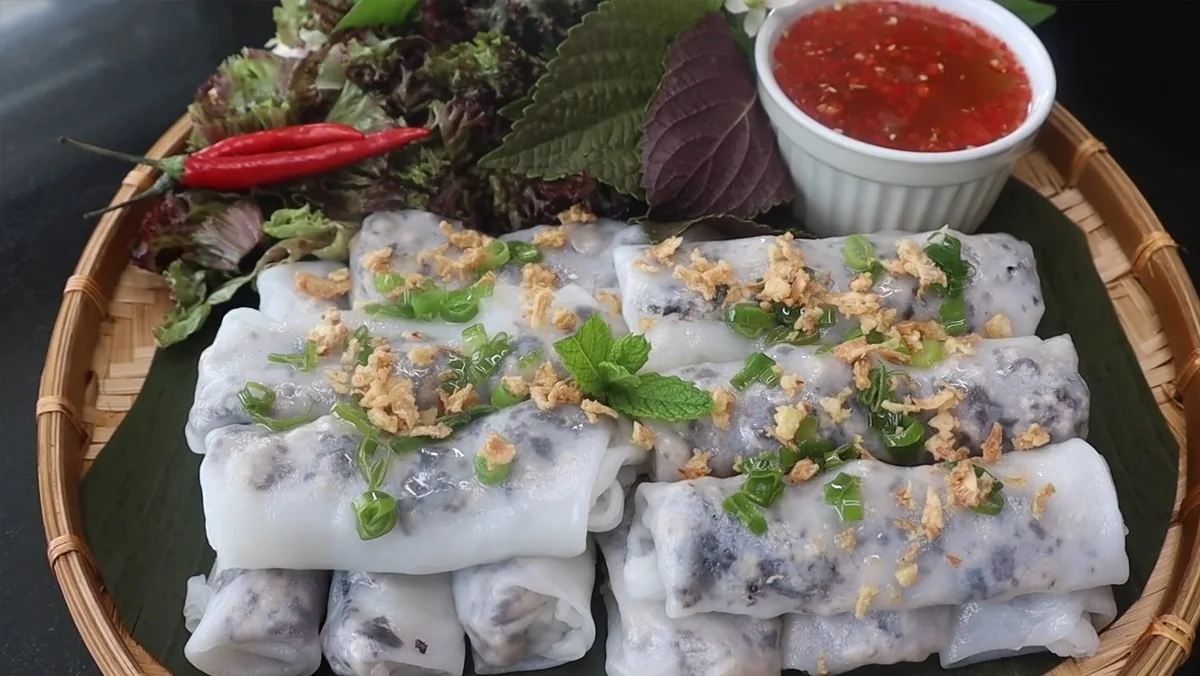
Hoi An's food carries centuries of trade with it — Chinese, Japanese and later French influence layered onto a central Vietnamese base. White rose dumplings, delicate steamed parcels of rice flour and shrimp, are the clearest example: by local account, a single family in town still makes the wrapper dough, and every restaurant serving the dish buys it from them rather than making its own.
Cao lau, a bowl of thick rice noodles, pork slices and crisp croutons, is unique to Hoi An because the noodles were traditionally made with water drawn from a specific local well; leave town and the dish tastes different, whatever a menu elsewhere claims. For something quicker between sightseeing stops in [Hoi An's old town](destinations/hoi-an), a plate of chicken rice from a stall near the market covers lunch without slowing the day down.
Saigon: broken rice, snails and a city that eats around the clock
Saigon eats later and louder than the north. Com tam, broken rice served with a grilled pork chop, a fried egg and pickled vegetables, works as breakfast, lunch or a midnight snack — there's no wrong hour for it here. Snail stalls, serving oc steamed, grilled or stir-fried with tamarind or butter, cluster in certain neighbourhoods and stay busy well past dinner.
Noodle soup splits two ways: hu tieu nam vang, a clear pork-and-seafood broth served in sit-down restaurants, and hu tieu go, the same idea from a pushcart, thinner and quicker. Bun mam, a fermented-fish noodle soup loaded with seafood, carries the boldest flavour of the lot and is worth one try even if the smell puts you off at first. [Ho Chi Minh City](destinations/ho-chi-minh-city) rewards a slow, hungry wander more than a checklist of sights.
Eating street food without any regret
- Pick stalls with fast turnover and a queue of locals rather than the cleanest-looking storefront — food cooked to order and sold quickly is generally the safest kind.
- Carry small notes; street vendors rarely keep change for anything large, and haggling over a bowl of noodles isn't the custom here.
- Stick to bottled or boiled water, including the ice — reputable stalls use filtered ice, but it's worth asking rather than assuming.
- Order breakfast dishes like pho early; broth that has simmered all day and bread left out since morning are never quite as good by evening.
- Taste unlabelled chilli or fish sauce before adding much — heat levels swing wildly between regions.
Plan it with us
A trip built around food works best when the route itself does the planning, moving through several regional kitchens rather than sitting still in one city's restaurant scene. These itineraries put the dishes above on the table without you having to track down every stall on your own.
Plan your trip
Tell us your dates, your group and what you want out of the trip. We reply with a costed itinerary within one working day.