Why go
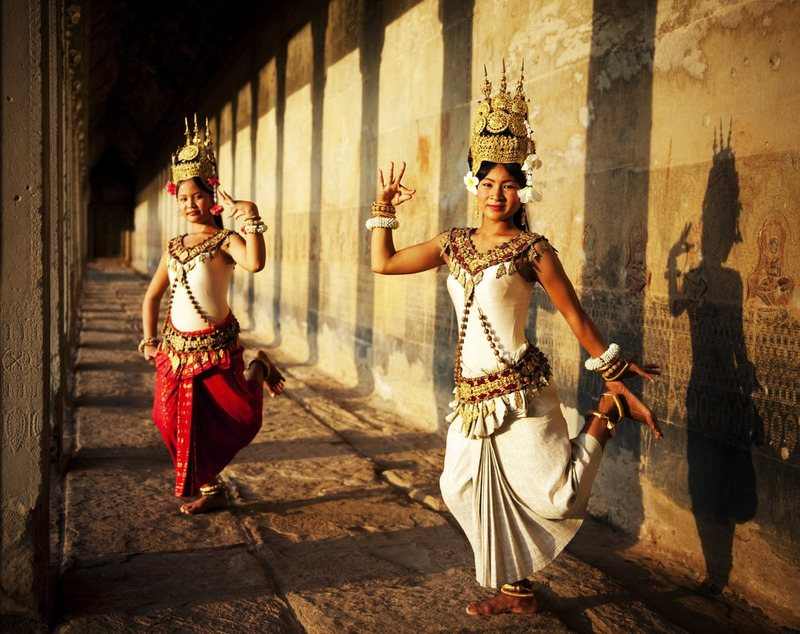
Angkor is the reason most travellers land here, and it earns the detour. The temple complex once anchored a Khmer capital of close to a million people, and what survives — carved sandstone towers, moats wider than rivers, galleries of relief carving running for hundreds of metres — still takes a full two or three days to see properly. Nothing about Angkor Wat photographs as small as it feels in person: the causeway alone runs 350 metres before you reach the first gate. Our [Cambodia history guide](travel-guide/cambodia-history-guide) has the fuller story of how the Khmer empire built and later lost this capital.
Siem Reap itself has grown up around that traffic, and it works well as a base rather than a sight in its own right. Guides, drivers and kitchens here are built around getting travellers to the temples early and back again before the heat sets in, and the town has an easy, walkable centre for evenings once the ruins close. Pair a couple of days at Angkor with a slower one on Tonle Sap, and Siem Reap covers both stone history and river life in one stop — a natural anchor for any [Cambodia](destinations/cambodia) itinerary.
Things to do
Angkor Wat before the heat
Most visitors arrive before dawn to watch the five towers silhouette against the sky, then spend the cooler morning hours working through the bas-relief galleries — nearly 800 metres of carved scenes from Hindu epics wrap the outer wall. Arrive by 5am for a spot at the reflecting pools, or come mid-afternoon instead when the crowds thin and the light turns warm on the stone.
Bayon’s stone faces
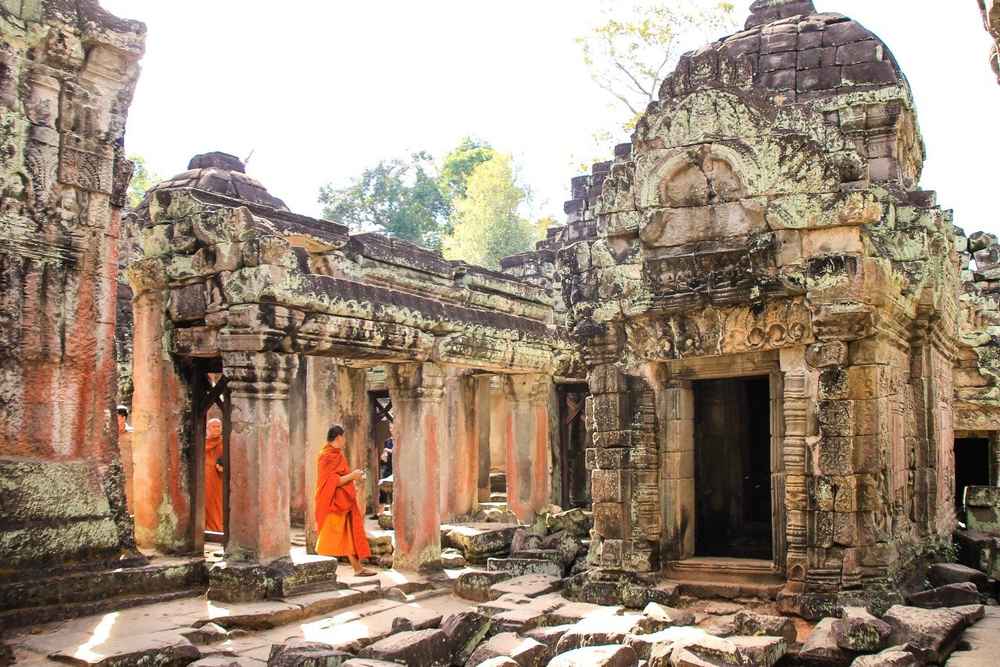
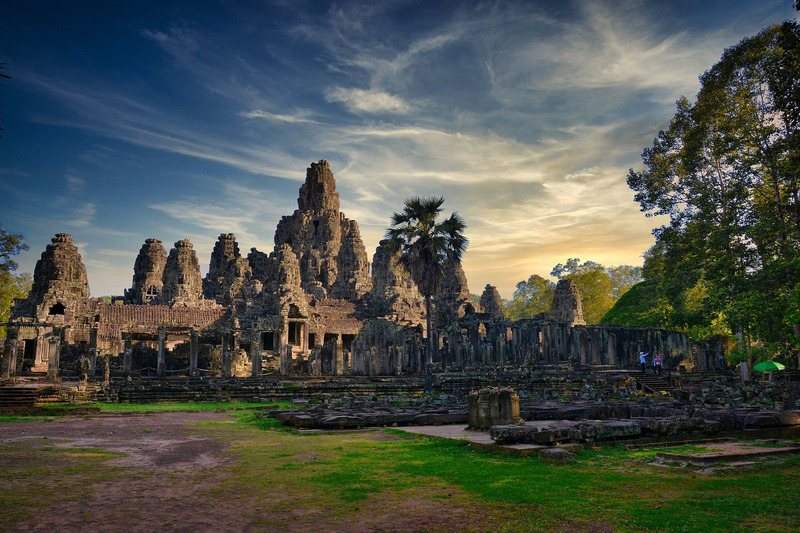
At the centre of the walled city of Angkor Thom, Bayon carries 216 carved faces across its towers, each one looking out in a different direction. Climb the uneven steps between them in the mid-morning light and the faces seem to multiply as you move — a deliberate trick of the original builders as much as anything.
Ta Prohm and the fig roots
Left largely as it was found, Ta Prohm has silk-cotton and strangler fig roots wrapped through its galleries and doorways, holding some walls up and pulling others down at the same time. It is one of the few Angkor sites where the jungle is still visibly winning, which makes it worth the extra half-hour drive from the main circuit.
Banteay Srei’s pink sandstone
About 25 kilometres north of the main temples, this small tenth-century temple is carved from a pink sandstone that takes finer detail than the grey stone used elsewhere at Angkor. The carving here is some of the sharpest in the Khmer empire — worth the extra distance if you have a third day.
Floating villages on Tonle Sap
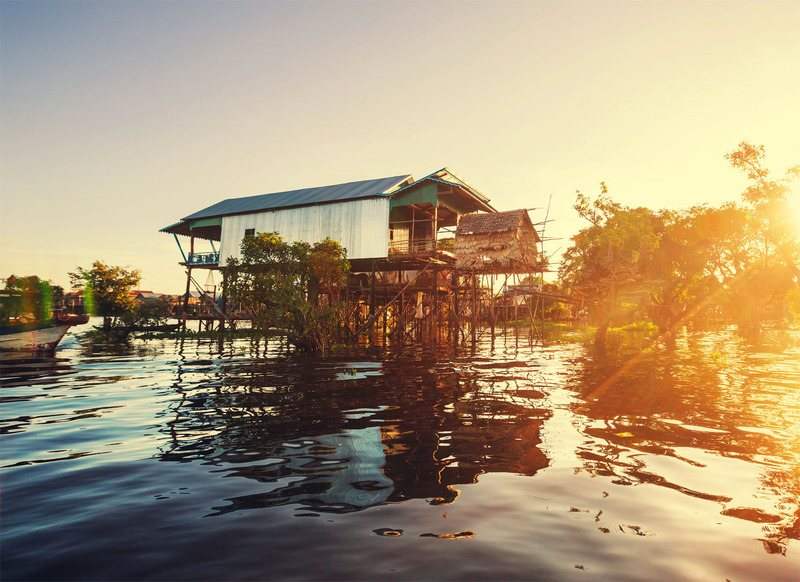
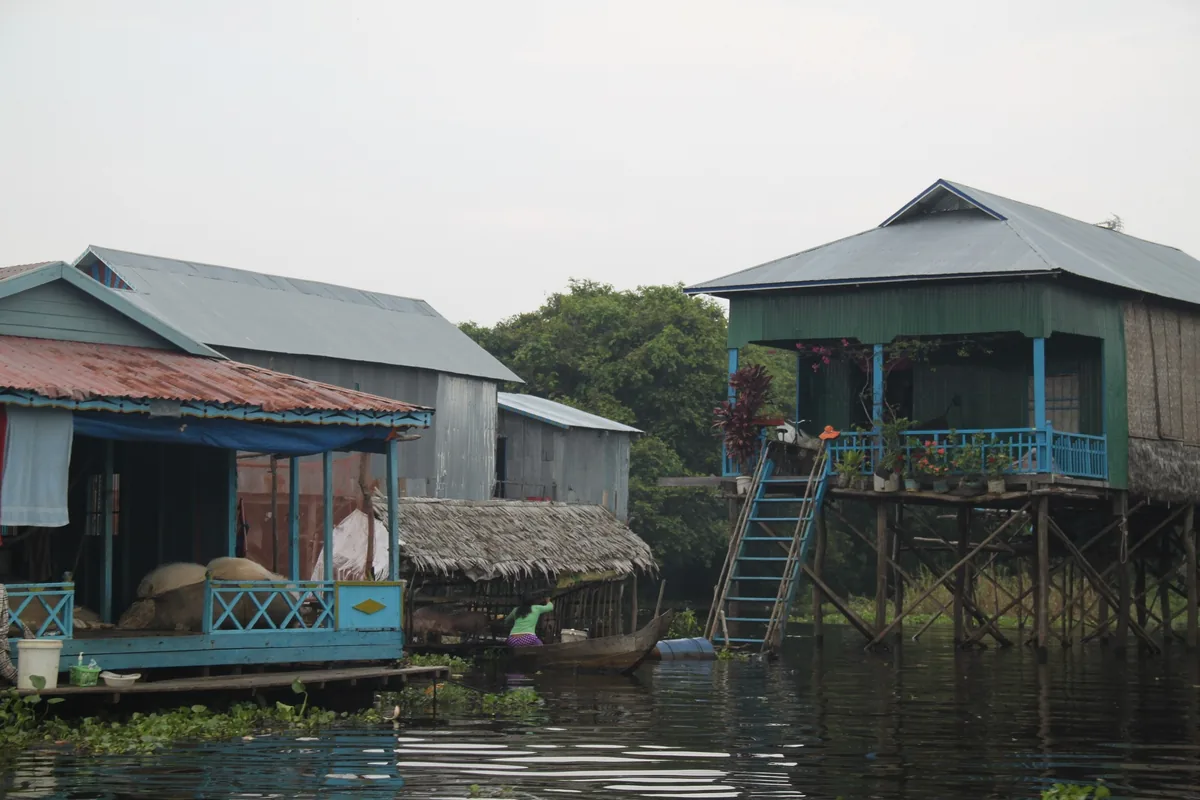
Tonle Sap swells to roughly four times its dry-season size once the monsoon arrives, and the lake’s fishing communities build their homes on stilts or on rafts to ride out the change. A boat trip to villages such as Kompong Phluk shows a side of Cambodia that has nothing to do with temples — houses, schools and shops all rising and falling with the water.
Old Market and Pub Street after dark
Once the temples close, Siem Reap’s old quarter fills up around the Old Market and Pub Street, where street stalls sell grilled fish and Khmer curry alongside the bars. It is touristy by Cambodian standards, but it is also the easiest place in town to eat well without planning ahead.
When to go
The dry season runs roughly November through April. December and January are the most comfortable months for walking around temples all day, with cooler mornings and lower humidity. March and April turn hot, often above 35°C by midday, which makes an early start closer to essential than optional.
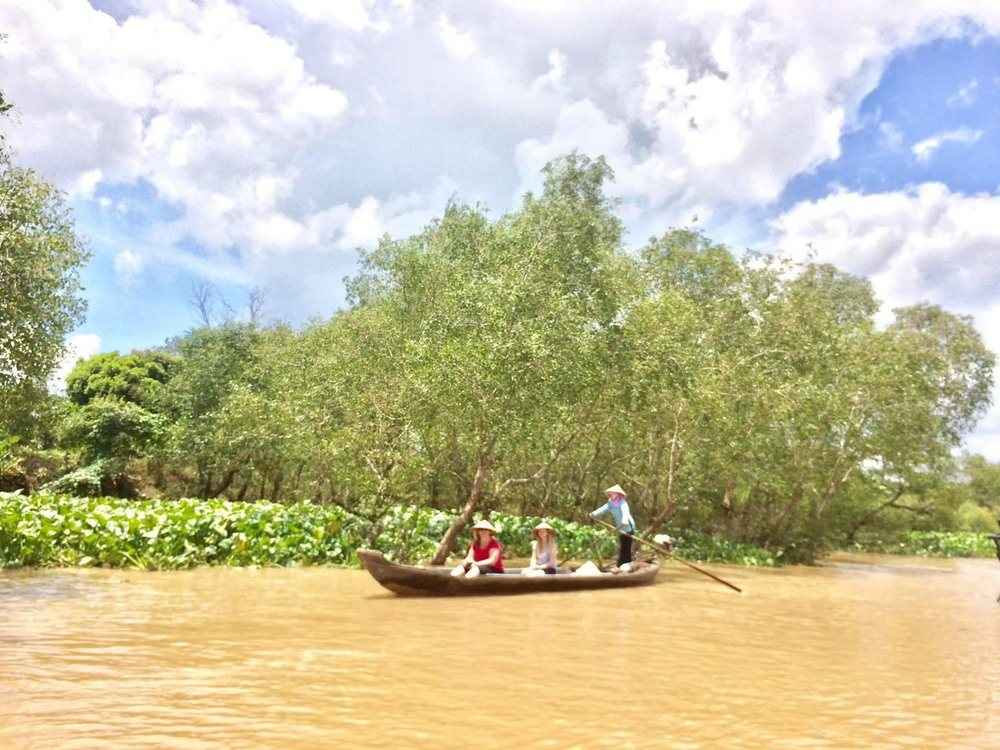
The wet season, from May to October, brings afternoon downpours rather than all-day rain, and the temples themselves are quieter and greener. It is also the best window for Tonle Sap, since the lake is at its fullest and boats can reach further into the flooded forest around the floating villages.
Getting there and around
Siem Reap Angkor International Airport connects to [Phnom Penh](destinations/phnom-penh) and several regional hubs. Overland, the drive from Phnom Penh takes around six hours on a paved highway; travellers arriving from Thailand often cross at the Poipet border before continuing east by road.
Inside the temple complex, hired drivers and tuk-tuks are the standard way to move between sites, since the distances between temples are too great to walk in the heat. Entry runs on an Angkor Pass system sold in one, three or seven-day options, checked at the gates each time you enter.
Tours that include Siem Reap
Every multi-country route on our [Cambodia tours](cambodia-tours) page builds in time at Angkor. These three are the ones that include Siem Reap directly.
Plan your trip
Tell us your dates, your group and what you want out of the trip. We reply with a costed itinerary within one working day.
In pictures
In pictures
In pictures
In pictures
In pictures
In pictures
In pictures
In pictures
In pictures
In pictures
In pictures