Why go
Kampot moves at a different speed than the rest of [Cambodia’s](destinations/cambodia) south. French colonial shophouses line streets that run down to the river, and the pace here is set by the water rather than by traffic. The town’s name is best known abroad for its pepper — Kampot pepper carries protected status for its growing region, and farms a short drive out of town run tours through the vines.
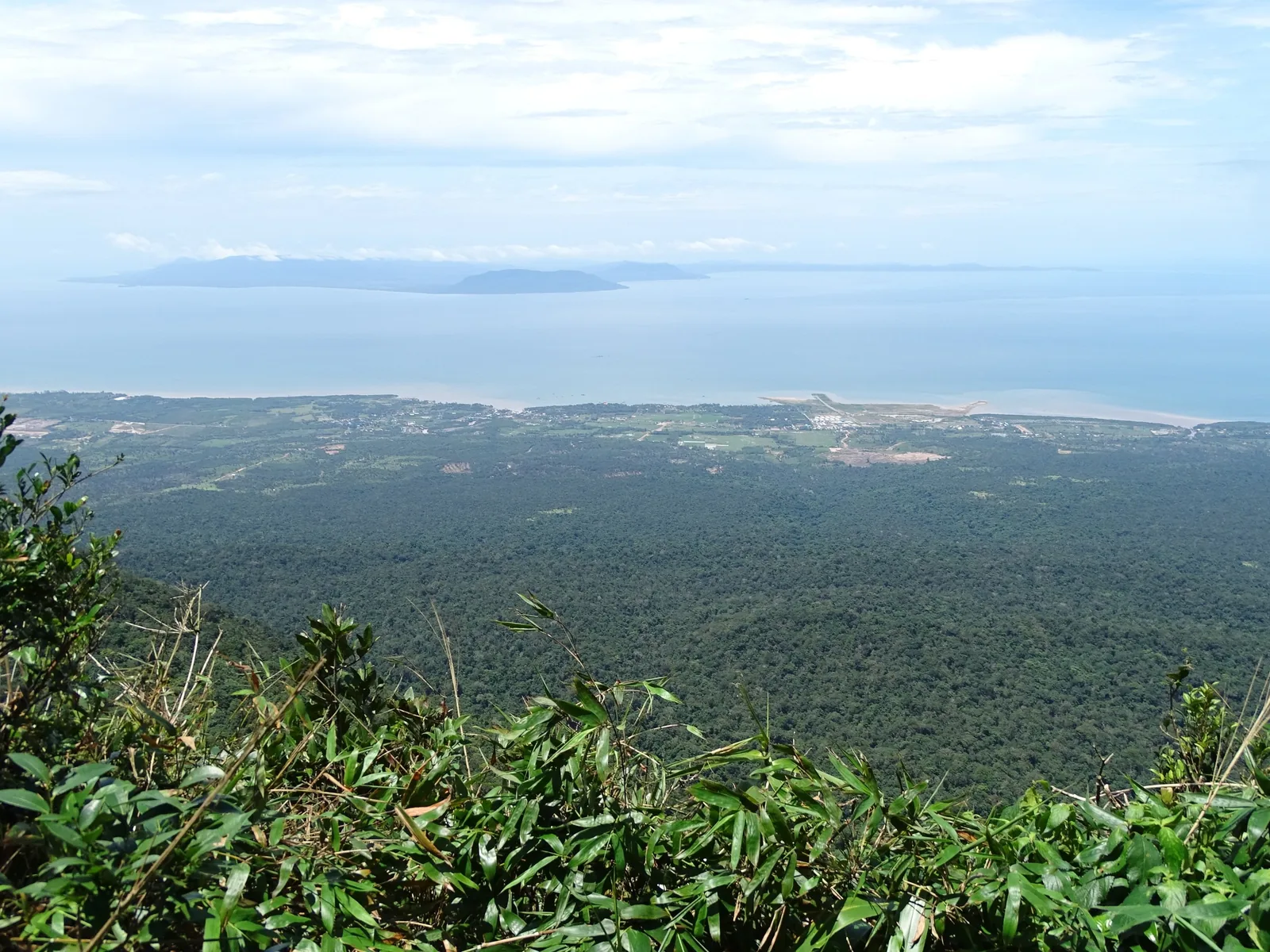
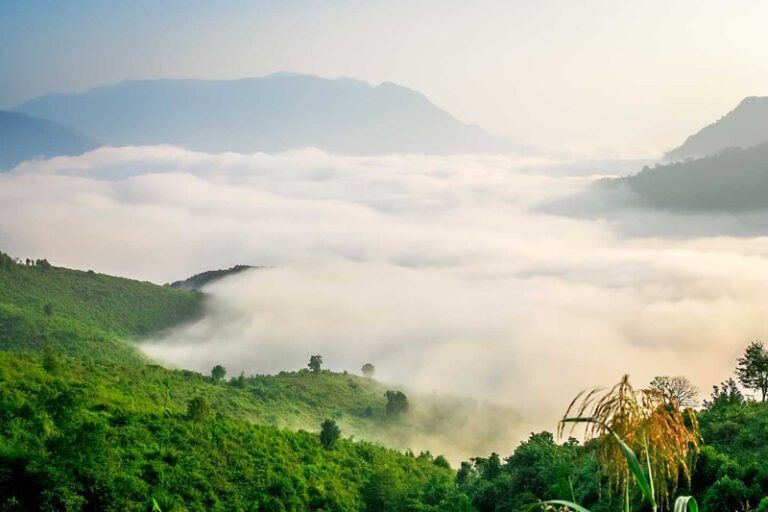
Above the town, Bokor Mountain rises to around 1,000 metres, cool and often wrapped in mist even when Kampot below is baking. A French-built hill station from the 1920s still stands up there, abandoned for decades before recent restoration work began. Combine a morning on the mountain with an afternoon on the river, and add on Kep, a half-hour away, for one of the more varied short stops on Cambodia’s south coast, within easy reach of [Sihanoukville](destinations/sihanoukville) further along it.
Things to do
Bokor Hill Station
Built by the French in the 1920s as a mountain retreat from Phnom Penh’s heat, Bokor Hill Station once held a hotel, a casino, a church and a string of villas, all abandoned after independence and left to the fog for decades. The old Bokor Palace Hotel still stands, weathered and hollow, alongside the roofless church — both make for an eerie, atmospheric couple of hours, especially when the mountain’s cloud cover rolls in. Our [Cambodia history guide](travel-guide/cambodia-history-guide) covers the colonial period behind sites like this one.
Kampot pepper farms
Pepper vines climb wooden frames on small farms scattered around Kampot, and several are set up for short visits explaining how the peppercorns are grown, picked and dried before they reach export markets. Kampot pepper carries a protected geographical status, similar to a wine appellation, and the difference between fresh local pepper and what most travellers have tasted at home is immediately obvious.
The Praek Tuek Chhu riverfront
Kampot’s river frontage is lined with restored colonial buildings, now mostly cafes and guesthouses, and a sunset boat trip on the Praek Tuek Chhu is one of the town’s simplest, most popular evenings out. Fireflies gather in the riverside trees after dark on quieter stretches upstream.
Kep and its crab market
A half-hour from Kampot, Kep was once a beach retreat for Phnom Penh’s wealthy before falling quiet for decades. Today its main draw is the Kep Crab Market, a row of stalls selling crab caught that morning and cooked to order with Kampot pepper — a pairing specific enough to this stretch of coast that it is worth building a lunch stop around.
Old Market and the town centre
Kampot’s own old quarter is small enough to walk in an hour, its shopfronts a mix of restored French-era buildings and working local businesses. A night market sets up along the river most evenings, with grilled skewers and noodle stalls drawing a local crowd as much as travellers.
When to go
November through March is the most comfortable stretch, with clearer skies over Bokor Mountain and dry conditions in town. Cooler weather up on the mountain can catch visitors off guard after the heat below — a light layer is worth packing even in the dry season.
April and May run hot, and the wet season from June to October brings heavier cloud cover over Bokor, sometimes cutting visibility at the hill station to almost nothing. Pepper farms stay open year-round, since the harvest and drying process runs on its own schedule rather than the weather calendar.
Getting there and around
Kampot has no airport; most travellers arrive by road from [Phnom Penh](destinations/phnom-penh), a journey of around two and a half hours, or from Sihanoukville in under two hours. Kep is a further 30 minutes along the coast.
Bokor Hill Station is reached by a paved road up the mountain, usually visited by hired car, tuk-tuk or organised tour rather than on foot. Around Kampot town itself, tuk-tuks and rented motorbikes cover the pepper farms and riverfront easily.
Tours that include the Cambodian south coast
Plan your trip
Tell us your dates, your group and what you want out of the trip. We reply with a costed itinerary within one working day.
In pictures
In pictures
In pictures
In pictures
In pictures
In pictures
In pictures
In pictures
In pictures
In pictures
In pictures