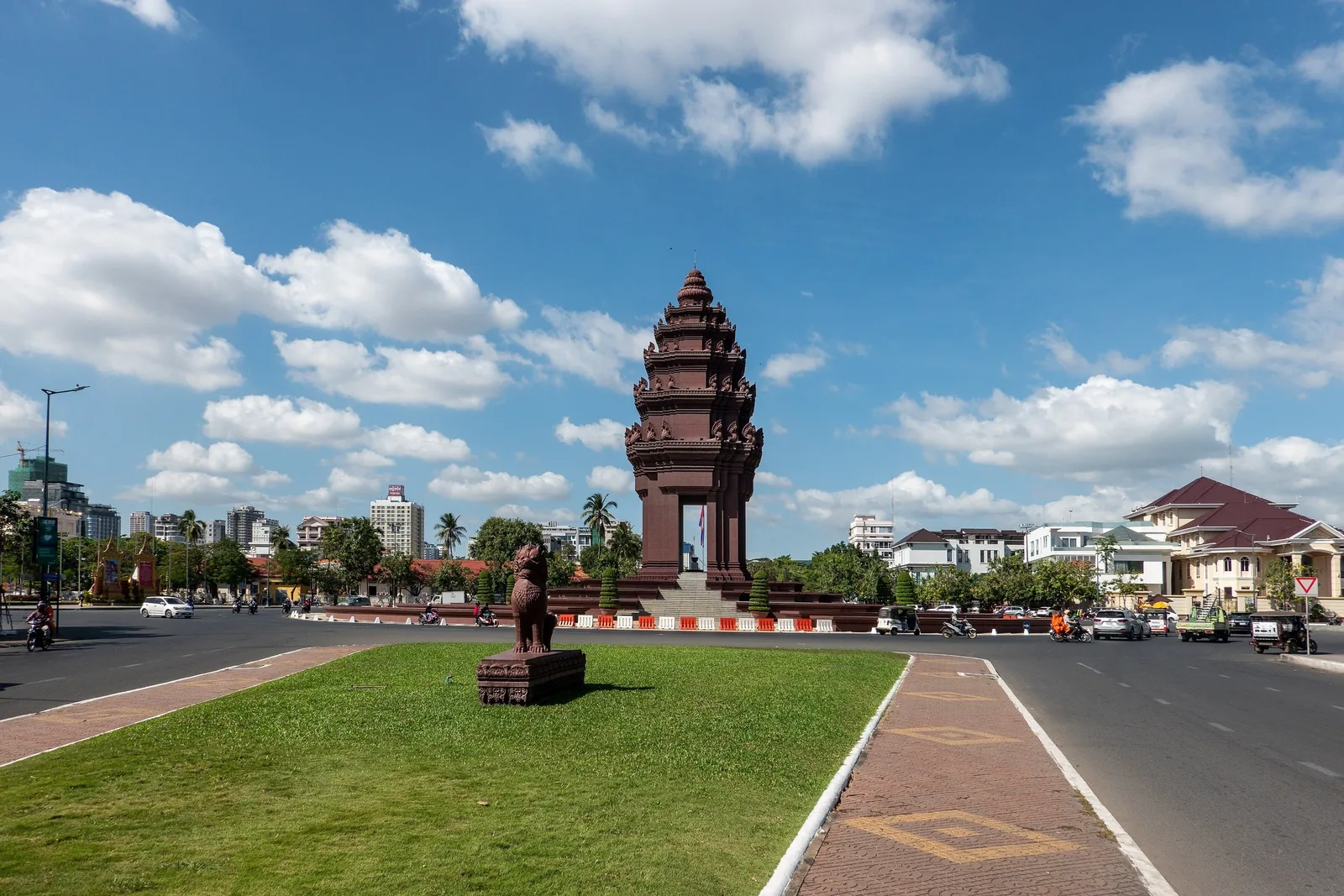
Why go
Cambodia’s capital rewards a slower look than most travellers give it on the way to [Siem Reap](destinations/siem-reap). The Royal Palace and Silver Pagoda show the country’s royal continuity; a short tuk-tuk ride away, Tuol Sleng and Choeung Ek hold the record of the Khmer Rouge years, 1975 to 1979, when the same city emptied almost overnight. Seeing both sides in one or two days gives a far fuller picture of modern [Cambodia](destinations/cambodia) than the temples alone.
Away from the historic sites, Phnom Penh runs at street level: a riverside promenade along Sisowath Quay, colonial-era shophouses turned into cafes, and markets that still trade the way they did decades ago. It is a working capital first, a sightseeing stop second, and that makes the couple of days here feel different from the resort pace of the coast or the temple crowds further north.
Things to do
The Royal Palace and Silver Pagoda
The Royal Palace compound remains the working residence of Cambodia’s king, so only part of the grounds is open to visitors on any given day. Inside, the Silver Pagoda takes its name from more than five thousand silver floor tiles beneath the carpeting, and houses a Buddha statue set with diamonds alongside centuries of royal regalia.
National Museum of Cambodia
Housed in a terracotta-red building just north of the palace, the National Museum holds the country’s largest collection of Khmer sculpture, much of it recovered from Angkor-era temple sites. It is a useful stop before or after Siem Reap, giving context to stone carving that is otherwise seen only in situ.
Tuol Sleng and Choeung Ek
A former secondary school, Tuol Sleng was converted into a security prison known as S-21 during the Khmer Rouge period, and today stands largely as it was found, preserved as a memorial and museum. Choeung Ek, around 15 kilometres outside the city, holds a memorial stupa and marks one of the sites where prisoners were taken. Both are sobering, quiet visits rather than typical sightseeing, and are best approached with time and without rushing — our [Cambodia history guide](travel-guide/cambodia-history-guide) gives useful background before you go.
The riverfront and the four-armed confluence
Sisowath Quay runs along the point where the Tonle Sap river meets the Mekong and the Bassac, a meeting of waters the Khmer call Chaktomuk. Evenings bring an easy mix of joggers, food carts and river breeze, and it is one of the few places in the city where the pace genuinely slows down.
Central Market and Russian Market
The Art Deco dome of Phnom Penh’s Central Market, built in the 1930s, still trades gold, clothing and street food under its yellow arches. Further south, the Russian Market is denser and less polished, known for its silk, souvenirs and a warren of food stalls tucked among the stock.
When to go
The dry season, November to April, is the most comfortable time to walk the city on foot, with December and January bringing the lowest humidity. As with the rest of Cambodia, March and April run hot, often above 35°C, which makes early starts and shaded routes worth planning for.
The wet season, May to October, brings short, heavy afternoon downpours rather than all-day rain. Mornings are usually clear, so a half-day of sightseeing before lunch still works well even outside the dry months.
Getting there and around
Phnom Penh International Airport sits around 10 kilometres from the city centre. Overland, buses and private cars connect from Ho Chi Minh City in roughly six hours, crossing the border at Bavet–Moc Bai, and from Siem Reap in around six hours by road. Coastal routes toward [Sihanoukville](destinations/sihanoukville) and [Kampot](destinations/bokor-kampot) also start from here.
Within the city, tuk-tuks and hired cars are the standard way to move between sights, since distances between the palace, the museums and Choeung Ek are too great for walking in the heat. Traffic can be heavy at peak hours, so allow extra time around morning and evening rush.
Tours that include Phnom Penh
Plan your trip
Tell us your dates, your group and what you want out of the trip. We reply with a costed itinerary within one working day.
In pictures
In pictures
In pictures
In pictures
In pictures
In pictures
In pictures
In pictures
In pictures
In pictures
In pictures