Why go
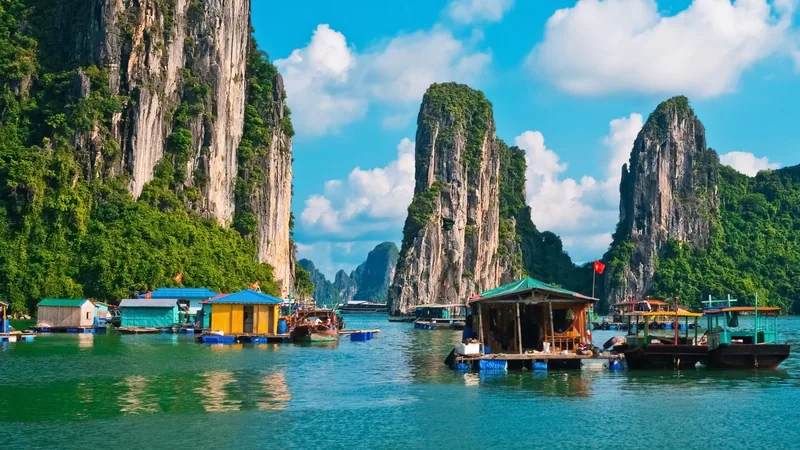
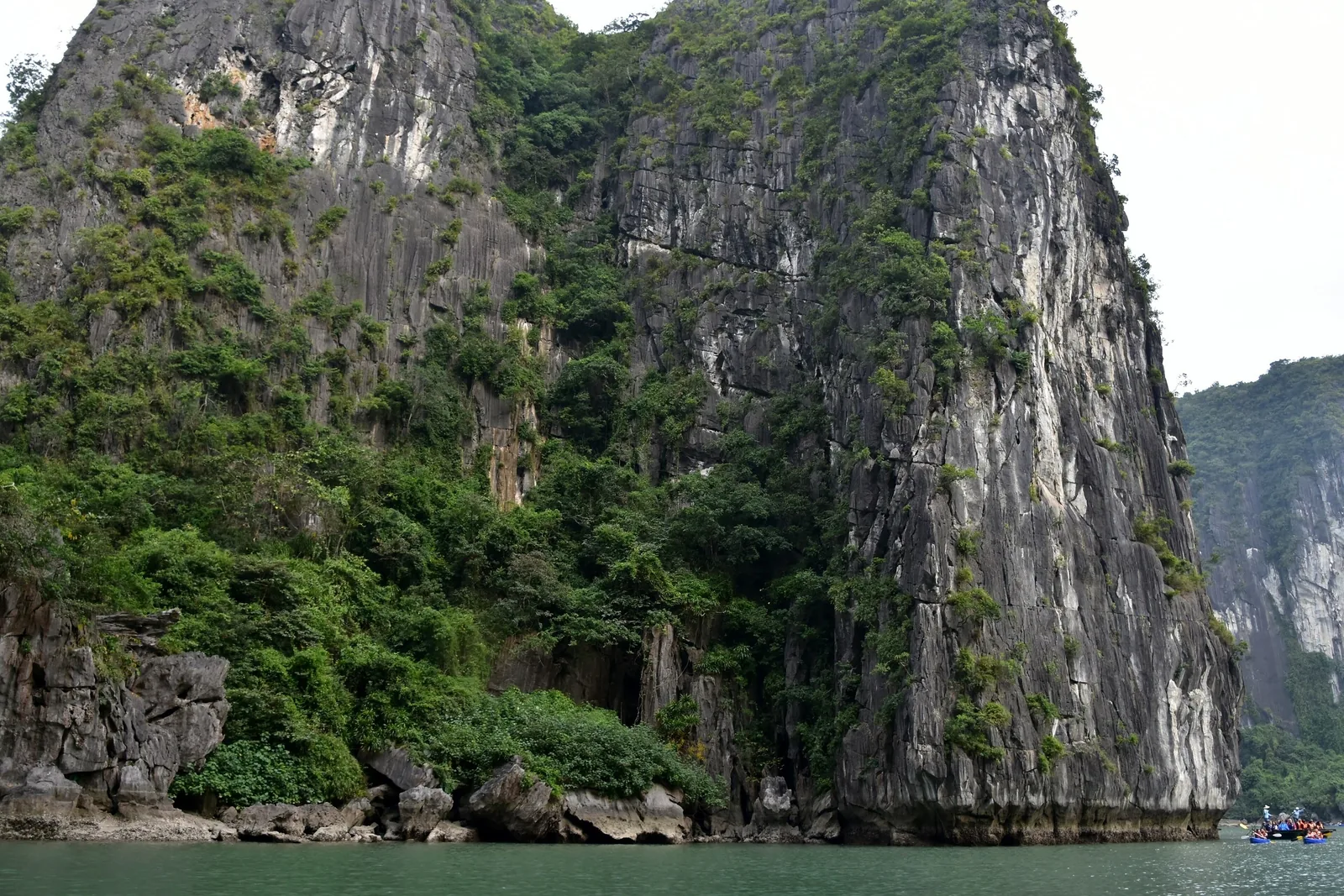
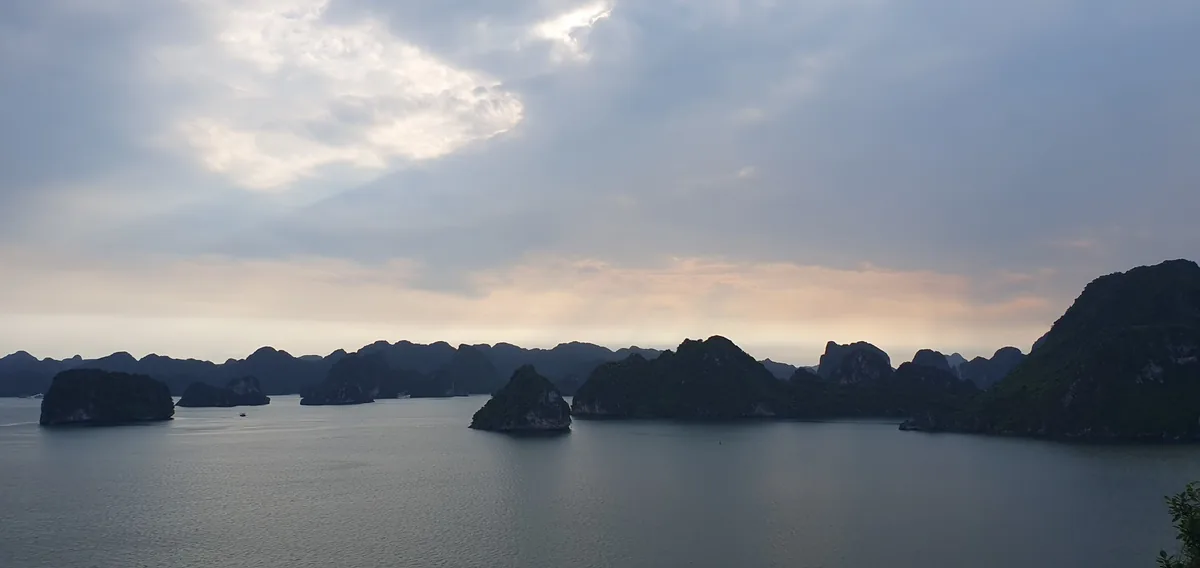
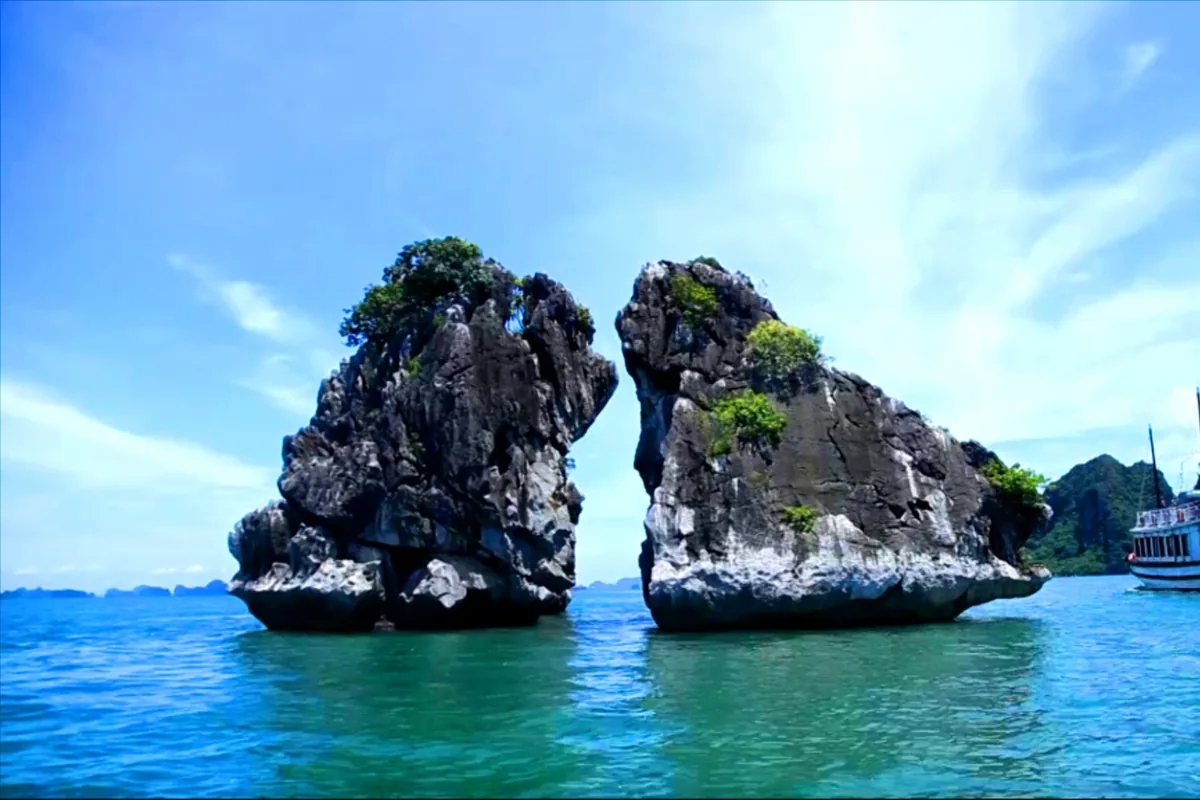
The bay earned its UNESCO World Heritage listing for a reason: limestone karsts pushed up out of shallow, jade-coloured water over hundreds of thousands of years, some barely wider than a boat, others tall enough to hide a cave system inside. Photographs flatten it into a single view, but moving through the islands by boat, watching the shapes shift and multiply as you round each headland, is a different thing entirely.
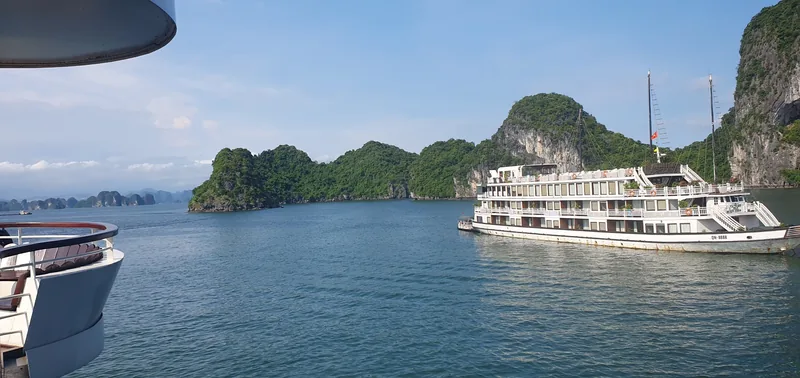
Most visitors book a cabin on a cruise out of Ha Long City or Tuan Chau harbour, sleep at anchor, and wake to the same water in morning light. The core bay near the harbours gets busy with day-tripper boats; further out, Lan Ha Bay and Bai Tu Long Bay carry the same scenery with a fraction of the traffic, which is why we route cruises there when the itinerary allows it.
Things to do
Sung Sot Cave
Known locally as Surprise Cave, this is the largest cave chamber open to visitors on Bo Hon island — a short climb up stone steps leads into a series of grottoes lit to pick out the stalactites, ending in a wide outer chamber with a view back over the water.
Kayaking into Luon Cave
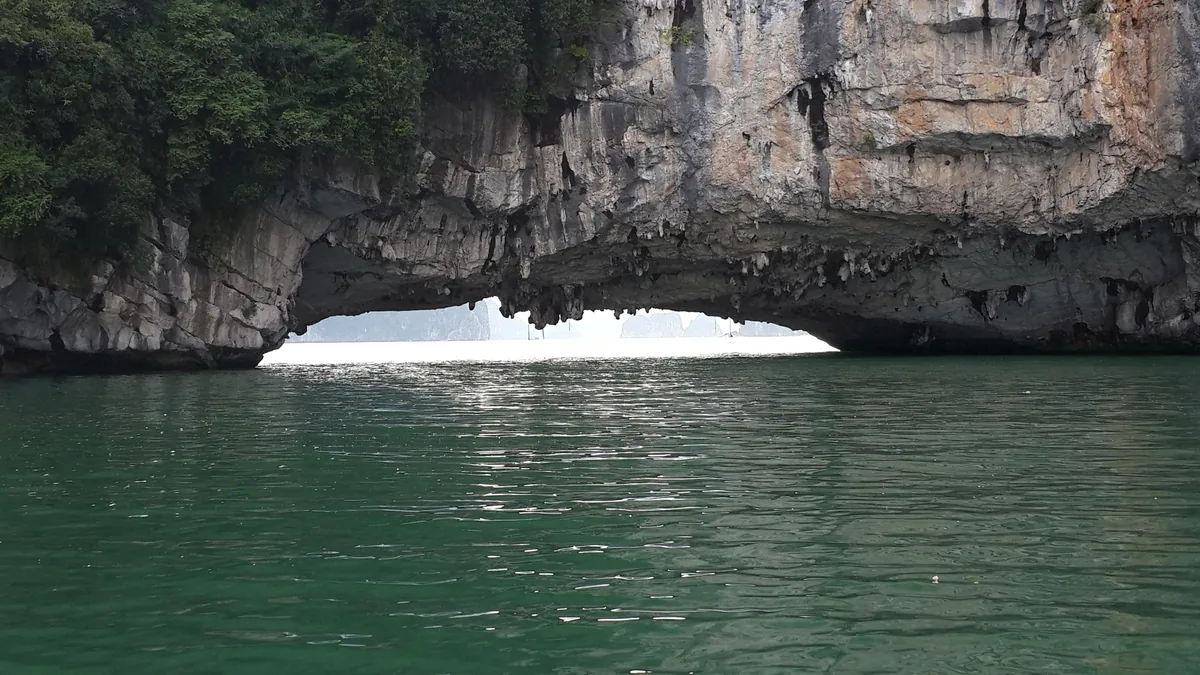
A low tunnel through the rock opens onto a still lagoon ringed by cliffs, paddled rather than motored so the only sound is the oars. Most cruises schedule this for late afternoon, when the light on the karst walls is best.
Ti Top Island
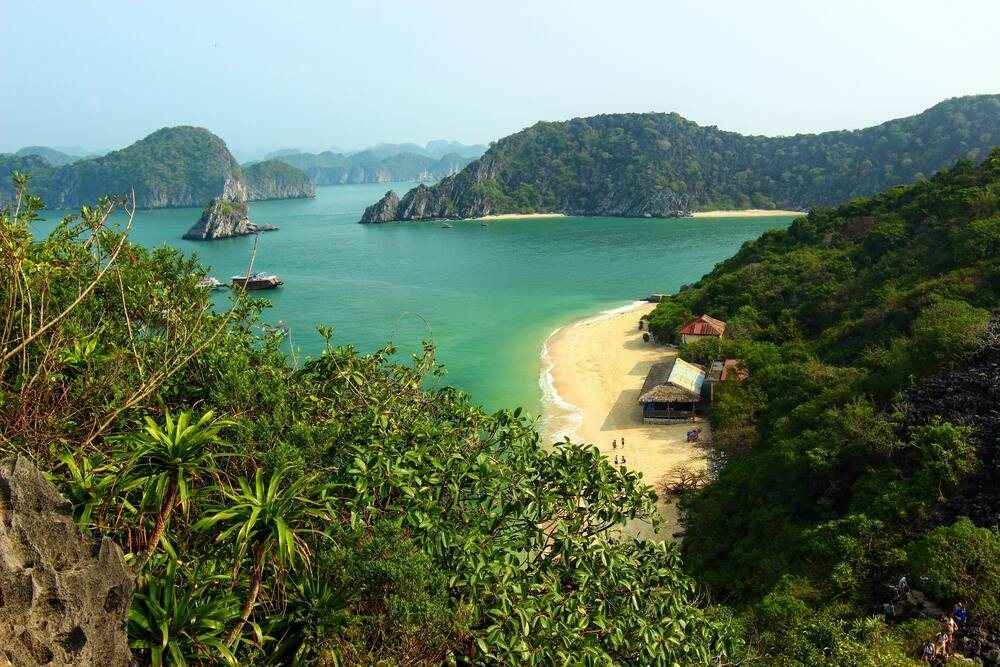
A steep set of steps leads to a viewpoint over the bay, and a small beach at the base is good for a swim between excursions. It's one of the few islands with a proper landing point rather than a cave mouth.
Cua Van floating village
A cluster of houseboats anchored in a sheltered cove, reached by a rowing boat crewed by residents rather than a cruise tender. Families here still fish for a living, and the short trip through the cove is quieter than the cave visits.
Lan Ha Bay and Cat Ba
South of the main bay, Lan Ha's karsts are just as dense but the water is clearer and the boat traffic thinner. Cat Ba town on the island of the same name has a small national park with limestone trekking trails, useful if a cruise has a second day built in.
When to go
October through December brings the driest, clearest air and the best visibility for photographs, with daytime temperatures in the low twenties. December through February turns cool and often misty — fine for cave visits, less so for the open-deck views the bay is known for, since fog can sit over the water for days. March and April warm back up before the wet season starts.
May through September is hot and humid, and July to September carries real typhoon risk: cruise operators cancel or reroute sailings on short notice when a storm is tracking through the Gulf of Tonkin, which is worth building slack into an itinerary for.
Getting there and around
Fly into Hanoi's Noi Bai airport, then it's roughly 2.5 hours by road on the Hanoi–Hai Phong–Ha Long expressway to the harbour your cruise departs from — Tuan Chau for the main bay, or Got harbour near Hai Phong for boats sailing into Lan Ha Bay. Once aboard, every excursion runs by tender or rowing boat; there's no reason to bring more than a day bag ashore.
Tours that include Ha Long Bay
Plan your trip
Tell us your dates, your group and what you want out of the trip. We reply with a costed itinerary within one working day.
In pictures
In pictures
In pictures
In pictures
In pictures
In pictures
In pictures
In pictures
In pictures
In pictures
In pictures