Why go
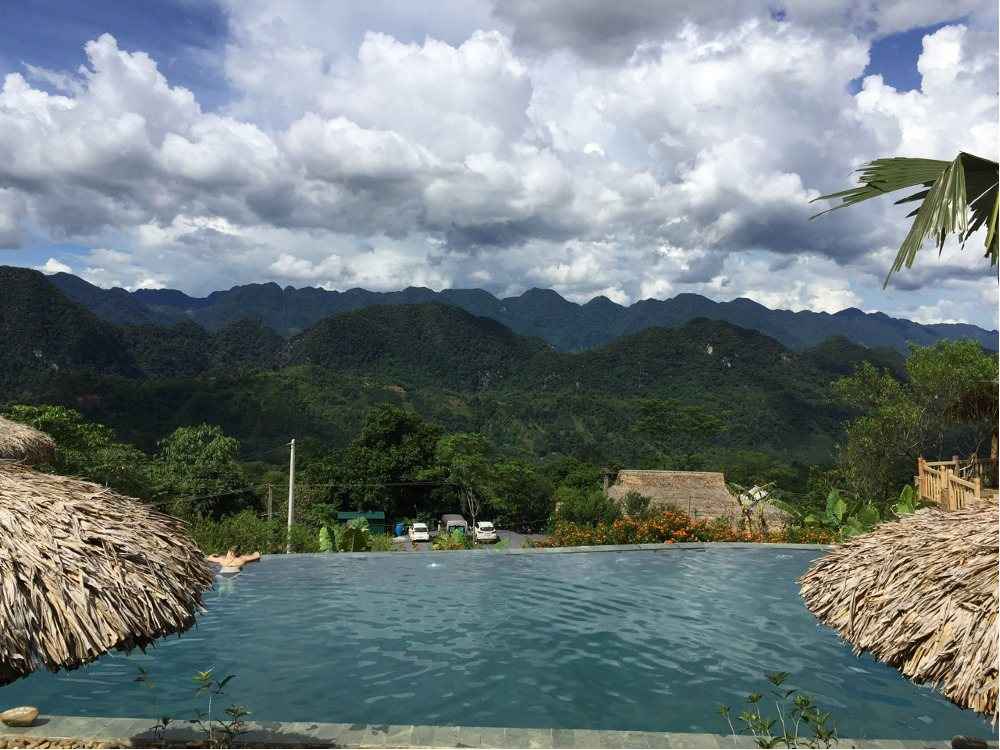
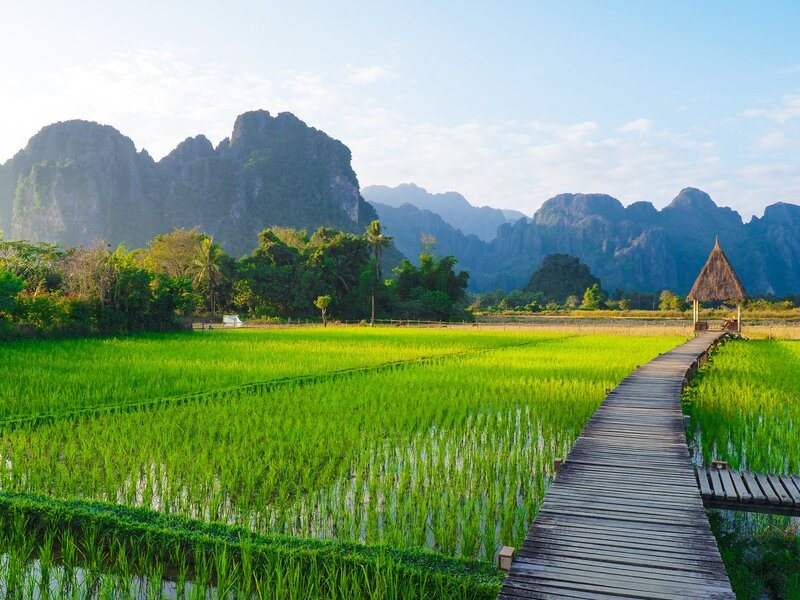
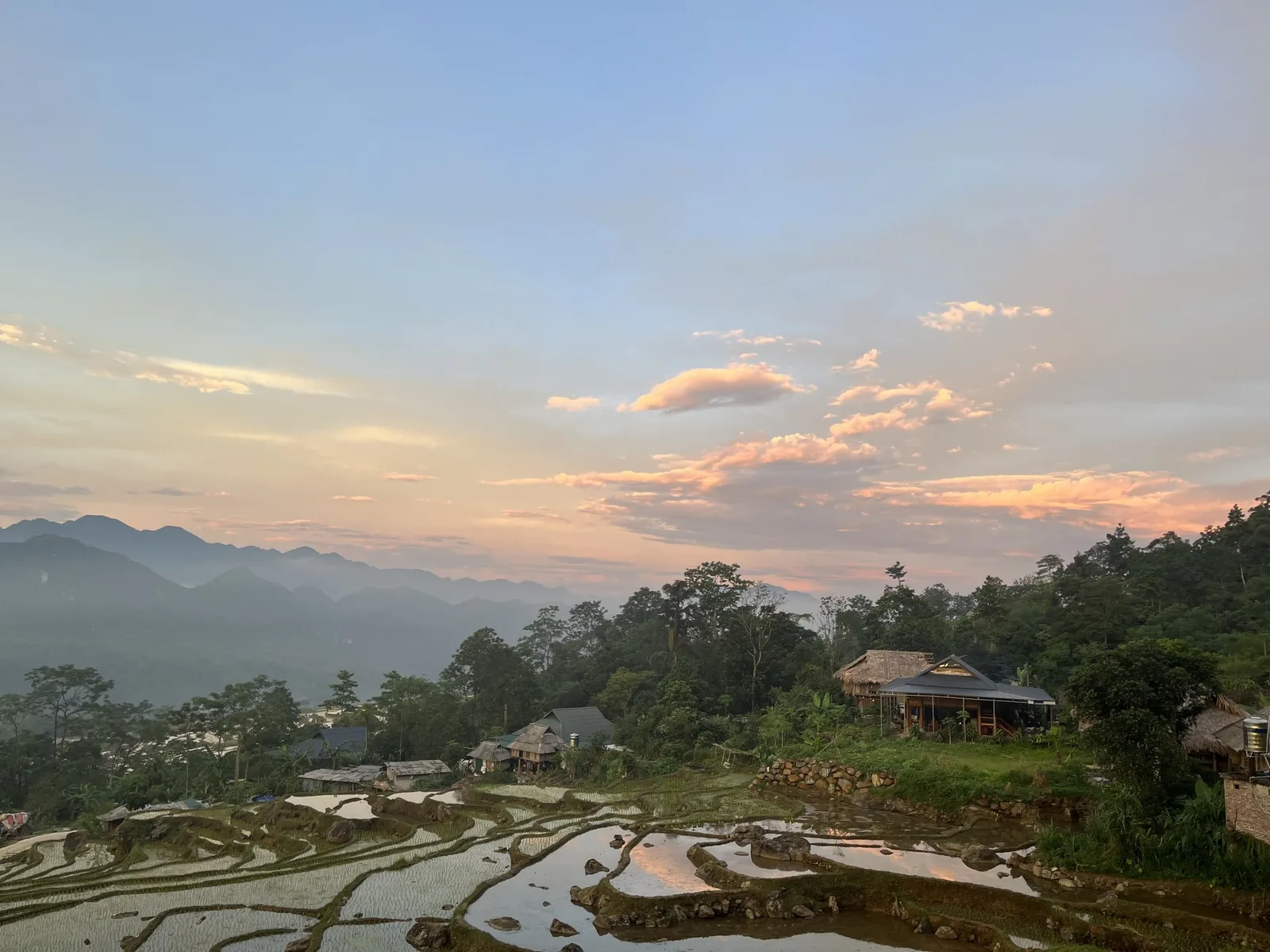
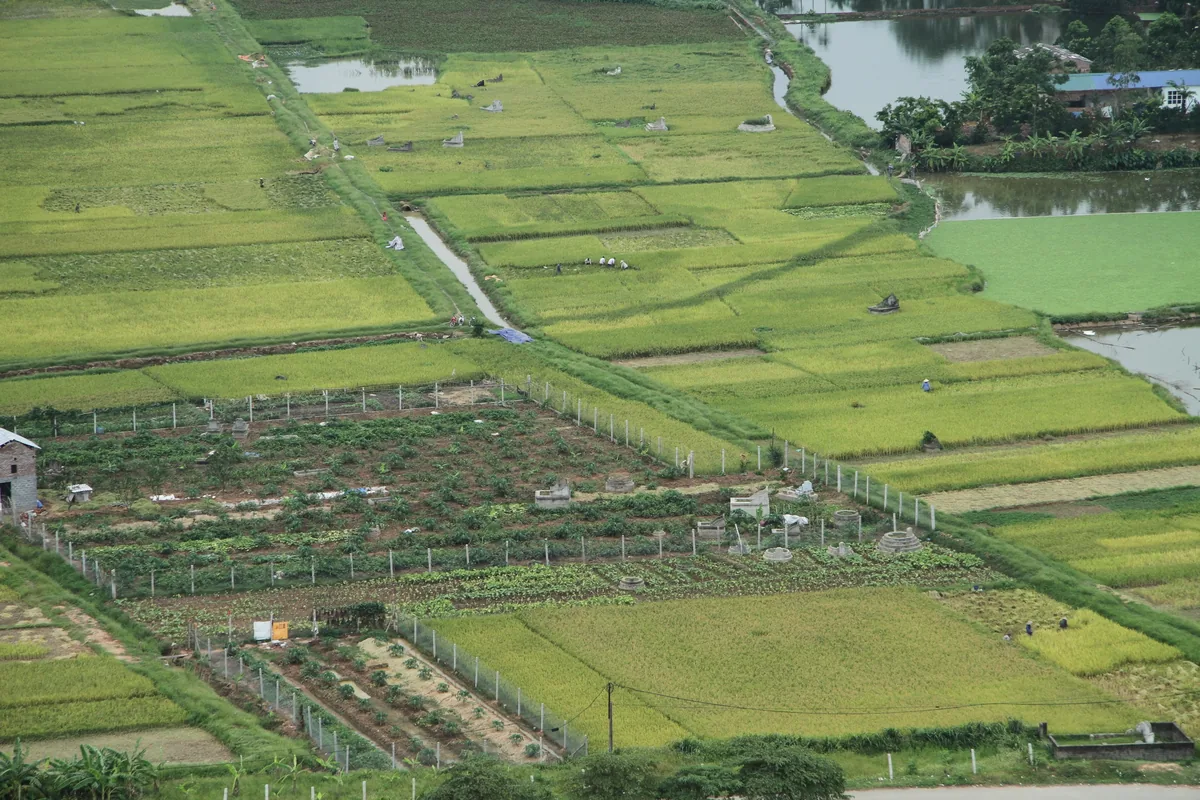
Pu Luong sits lower and greener than the high mountain routes further north, a nature reserve rather than a single town, where Thai stilt houses sit above paddy fields that climb the hillsides in narrow steps. It draws a fraction of the visitors that [Sapa](travel-guide/sapa-things-to-do) does, which keeps the villages working rather than performing for tour groups.
The appeal is walking through it rather than viewing it from a bus window: trails link Thai and Muong hamlets across the valley floor and up onto the ridgelines, short enough for a day and easy enough that no technical trekking experience is needed.
Things to do
Trekking between Thai villages
Trails connect hamlets like Kho Muong, Don and Nua across the valley, threading between paddy fields and along streams — a half-day loop covers two or three villages without needing a guide with specialist mountain experience.
Bamboo water wheels
Rows of hand-built bamboo wheels line several of the streams, turned by the current to lift water up into irrigation channels for the terraces above — a small piece of engineering that's become one of the valley's more photographed sights.
Hieu Waterfall
A multi-tiered waterfall a short walk from the road, with a pool at the base that's cool enough for a swim after a warm trekking day.
Cycling the valley floor
Flat roads run between the villages and rice paddies, an easier alternative to trekking on a hot day and a good way to cover more ground between homestay stops.
An evening in a homestay
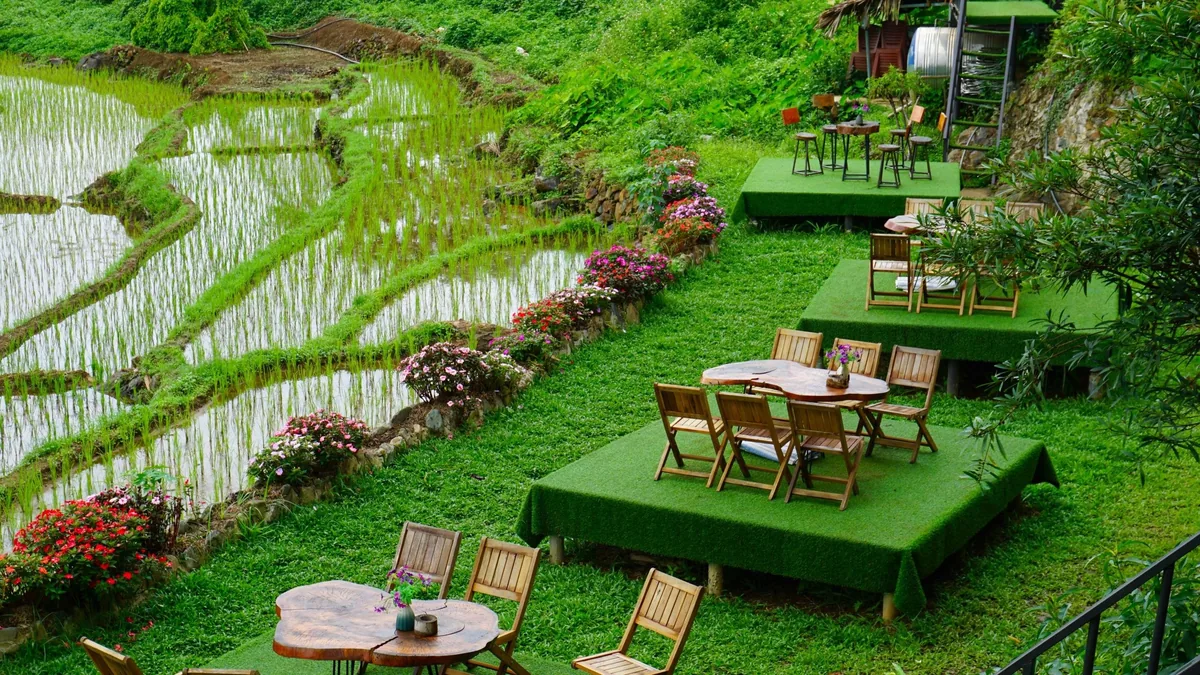
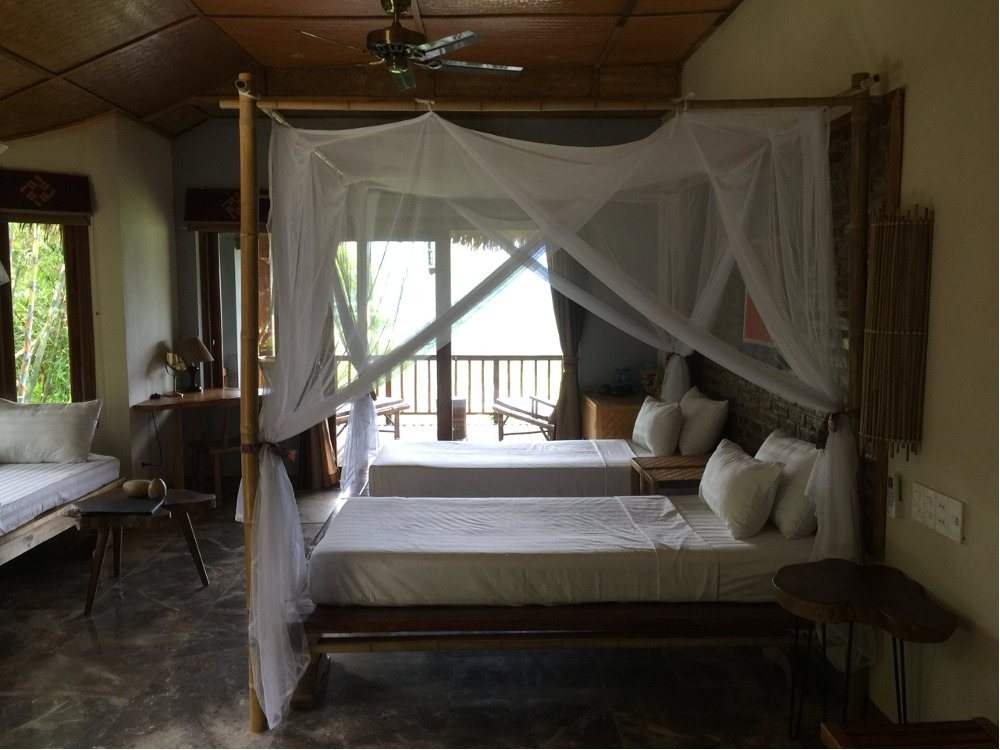
Most visitors overnight in a Thai stilt house or a small eco-lodge built in the same style, with a communal dinner, rice wine, and a night's sleep to the sound of the stream rather than traffic.
When to go
The terraces flood for planting in late May and early June and turn into a patchwork of mirrored water — the single best window for photographs. July and August are lush and green as the rice grows in. Mid-September through October brings the second harvest, when the terraces turn gold before cutting. November through February is cooler and drier, better for trekking comfort but with bare paddies rather than a dressed landscape. April through June builds toward the year's hottest weeks.
Getting there and around
There's no airport nearby — Pu Luong is reached by road only, about 3.5 to 4 hours from Hanoi, often combined with a stop in [Mai Chau](travel-guide/hanoi-in-autumn) on the way. There's no public transport network into the reserve itself, so a private vehicle or arranged transfer is the practical option; once there, walking and cycling cover the villages and trails.
Add Pu Luong to a Vietnam route
No fixed itinerary runs through Pu Luong today, but it fits naturally onto a longer Vietnam route as a private extension — a couple of days added before or after a northern leg.
Plan your trip
Tell us your dates, your group and what you want out of the trip. We reply with a costed itinerary within one working day.
In pictures
In pictures
In pictures
In pictures
In pictures
In pictures
In pictures
In pictures
In pictures
In pictures
In pictures